With the best credit decision engines, lenders process high application volumes under consistent policy rules and send only the exceptions to manual review.
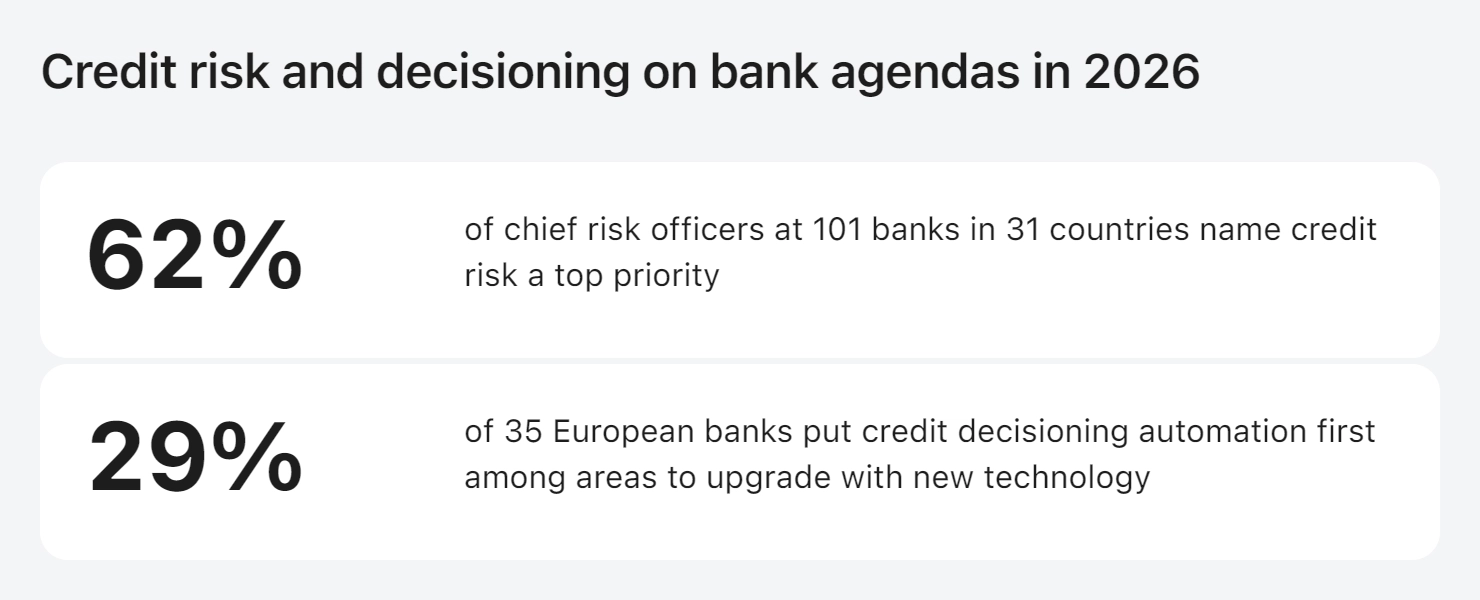
Credit risk is back at the top of bank risk agendas: in the 2026 EY and IIF Global Bank Risk Management Survey of 101 banks across 31 countries, 62% of chief risk officers named it a top priority. In PwC’s 2026 Credit Risk Management Maturity Survey of 35 European banks, credit decisioning automation (rule engines, AI scoring, and override logic) ranked first among the areas banks want to upgrade with new technology, at 29%.
In this article, we outline the 8 best credit decisioning software vendors to watch in 2027. Each review shows whether the platform performs commercial credit analysis or only moves applications through the decision workflow.
How We Created This Listing
For this review, we analyzed credit decisioning software providers against four criteria: how flexible the decision engine is, whether scoring can run on AI models, how far the product can be customized, and which integrations ship ready.
The eight products include full lending platforms as well as automatic credit decision software packages, and the same criteria apply to both groups.
For commercial lenders, we also checked whether each product covers tasks such as spreading and covenant monitoring and whether the vendor publishes pricing and implementation timelines. Sources are public vendor materials as of November 2026.
As credit decisioning platforms may differ significantly from one configuration or market to the next, the list is a comparative overview, not a ranking.
HES FinTech, the publisher of this article, develops HES LoanBox, one of the eight products, and HES LoanBox was reviewed against the same criteria as the rest.
What Is Credit Decisioning Software?
A credit decisioning system, also called loan decisioning software or a loan decisioning system, is a platform that automates and standardizes credit decisions. Its central component is the credit decisioning engine. The engine applies the lender’s credit policy to each application, including eligibility rules and score cut-offs, and returns an outcome: approve, decline, or refer for manual review. In a fully automated setup, this outcome is final. Otherwise, an underwriter confirms it.
Most engines take a risk score from a credit scoring model as one input. The model estimates the probability that the borrower defaults within a set period. Bureau data is the usual input. For business borrowers the model reads the applicant’s financials, and where open banking is connected, transaction history as well. Its output may be a probability estimate or a score that ranks applicants by risk. It does not apply the lender’s policy or make the decision. The model can be built into the engine or come from a vendor that specializes in scoring and returns the score to the lender’s origination system or decision engine.
Deloitte expects GenAI to read documents in context and interpret complex policies, then extract key data and produce a first draft of the credit memo. McKinsey’s analysis adds that AI agents could collect borrower data and calculate ratios before a credit officer reviews the file.
Who Uses Credit Decisioning Platforms: Banks, Fintechs, and Other Lenders
A credit decisioning platform for banks is usually judged on core banking integration and on how well it explains each decision. Fintechs make frequent product and credit policy changes, so the best credit decisioning platforms for fintechs tend to be cloud-based credit decisioning tools built API-first.
| Lender type | What they offer | What they need from decisioning software |
|---|---|---|
| Banks | Retail and commercial loans | Compliance controls, core banking integration, explainability, enterprise security |
| Credit unions | Consumer and member business loans | Low cost, flexible rules, simple manual review |
| Fintechs | Digital-first loans | API-first design, real-time decisions, machine learning, alternative data |
| Micro-lenders | Small, short-term loans | Quick evaluation, low processing cost, fraud detection |
| BNPL providers | Point-of-sale credit | Instant credit decisioning (real-time decisions in under a second), behavioral data, scalability |
| Mortgage lenders | Long-term, high-value loans | Document intelligence, income and asset verification, audit trails |
| SME and business lenders | Term loans, credit lines, SBA loans | Spreading and cash-flow analysis, credit memos, committee approval, covenant tracking |
How Does Credit Decisioning Software Work?
Although credit decision tools may work in different ways, automated credit decisioning software usually follows these five steps:
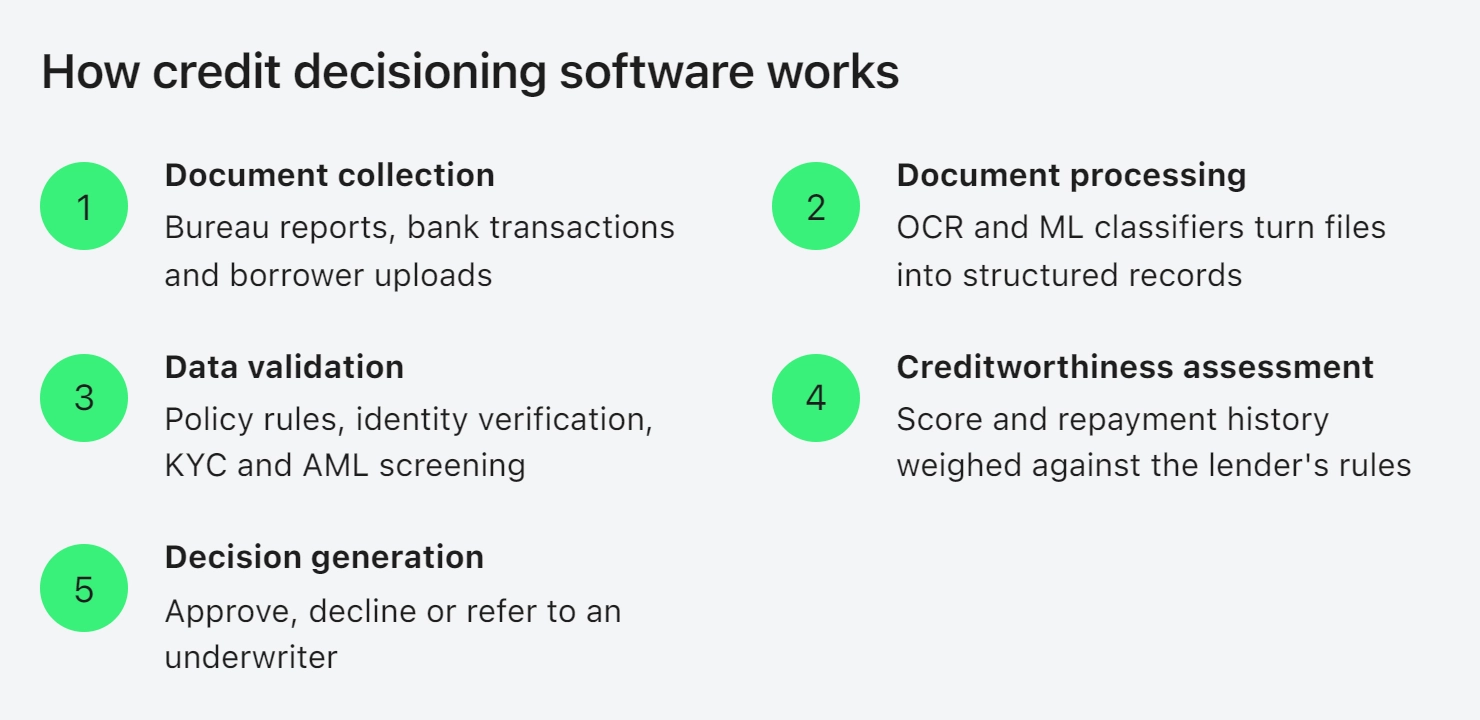
1. Document collection. A credit decisioning platform pulls reports from credit bureaus and bank transaction histories, often through open banking, plus the documents the borrower uploads. External sources connect through credit decisioning API integrations, and a data orchestration layer picks which ones to call for a given application.
2. Document processing. OCR and ML classifiers turn scans and spreadsheets into structured records. After this data aggregation step, every later check works from one dataset.
3. Data validation. Credit decision software tests the data against internal policy rules, such as a minimum income or a maximum debt-to-income ratio, and runs identity verification along with KYC and AML screening. Missing data and policy breaches are flagged before the assessment starts.
4. Creditworthiness assessment. The platform weighs the applicant’s score and repayment history against the lender’s own rules, then adds debt-to-income and cash-flow stability where the credit policy calls for them.
5. Decision generation. At the last step, credit risk decisioning software combines the policy checks and the score into one recommended outcome. Clear cases are approved or declined automatically; anything outside the thresholds goes to an underwriter. When the answer is a decline, the system stores the principal decline reasons that the adverse action notice will need.
Best Credit Decisioning Software to Look Out For in 2027
Lists of the best credit decisioning software for banks tend to mix products that do different jobs. Some are full lending platforms with decisioning inside. Others are standalone loan decisioning software that works on top of an existing loan origination system. The order below is not a ranking. Standalone scoring models are compared in our AI credit scoring software review, and full commercial loan platforms are compared in our commercial loan software review.
FICO Platform
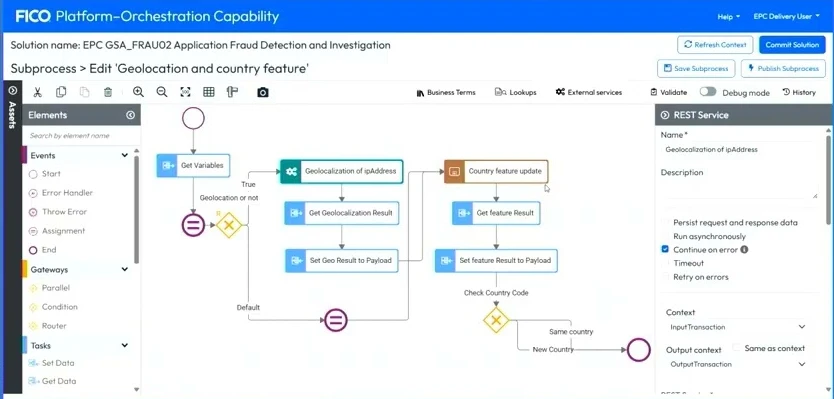
FICO Platform is an enterprise decision management platform where predictive analytics and business rules drive decision execution. Its lending product is FICO Originations Solution, Powered by FICO Platform, which takes an application from submission to decision under configurable policies.
The origination modules cover strategy design and model deployment, with 130+ third-party data providers and fraud and identity checks. For business credit, FICO also offers the Small Business Scoring Service (SBSS), which combines the owner’s consumer credit with business credit data.
The SBA stopped using SBSS to screen 7(a) Small loans in March 2026, though SBA Express lenders still use it.
Best suited for: Banks and large lenders that run high application volumes and have in-house analytics teams.
Key features:
- Application-to-decision processing
- Business rules management
- Predictive analytics and model deployment
- Third-party data access
- Decision simulation
- Cloud deployment, on-premises or hybrid
Pros:
- Access to 130+ third-party data providers through one platform
- Application fraud and identity checks inside the origination flow
- Strategy simulation to test policy changes before go-live
- Cloud or on-premises deployment, plus a hybrid option
Cons:
- Steep learning curve for teams new to enterprise decision management
- Complex initial setup that needs substantial technical resources
- Transaction fraud and customer management sold as separate FICO products
- No financial spreading or covenant monitoring tools
Experian PowerCurve Originations
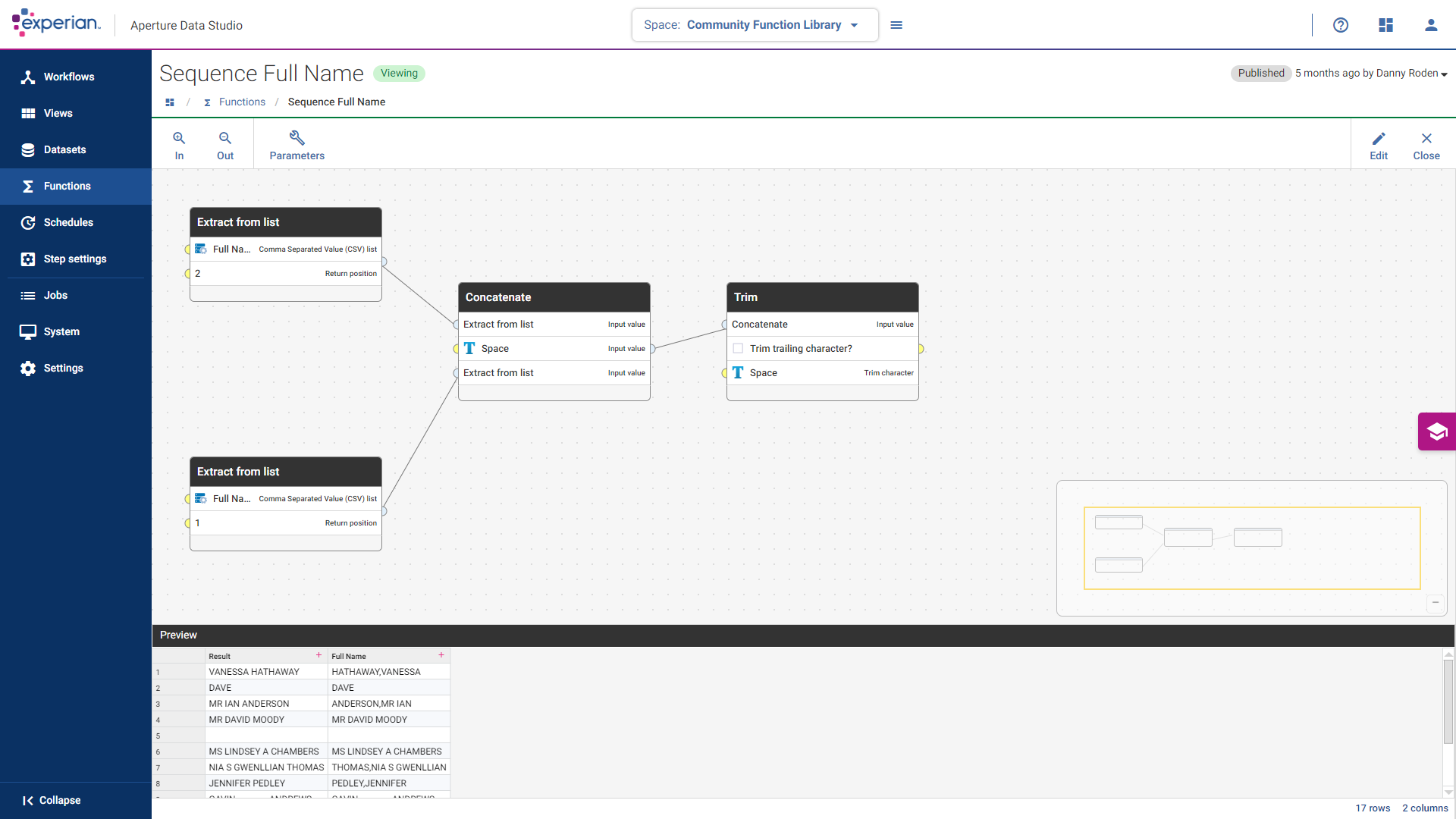
PowerCurve Originations is Experian’s product for customer acquisition and credit application processing. The solution’s credit decisioning engine combines Experian bureau data with the lender’s own data and scores each application in real time or in batches.
Business users edit its originations-specific rules engine through a web interface. The product is delivered from the cloud. In Australia, Experian also sells a packaged edition, PowerCurve Originations Essentials, on its Ascend Platform. In June 2026, Experian announced an agentic AI layer for Ascend covering credit decisioning. For business lending, Experian added UK commercial bureau data on more than 8 million businesses to Ascend in January 2026.
Best suited for: Banks, credit unions, auto lenders, and consumer lenders that rely on bureau data.
Key features:
- Bureau data connectivity
- Analytics and scoring
- Strategy design and testing
- Business-user rule editing
- Real-time and batch decisions
- Operational dashboards
Pros:
- Pre-connected Experian bureau data, with no separate data-source setup
- Business-user rule editing without IT tickets for routine changes
- Packaged SaaS edition on the Ascend Platform in Australia
- Agentic AI layer for credit decisioning announced for Ascend in June 2026
Cons:
- Consumer-credit orientation, with limited coverage of commercial lending workflows
- No documented on-premises deployment in current product materials
- No spreading or covenant monitoring for commercial deals
Provenir AI Decisioning Platform
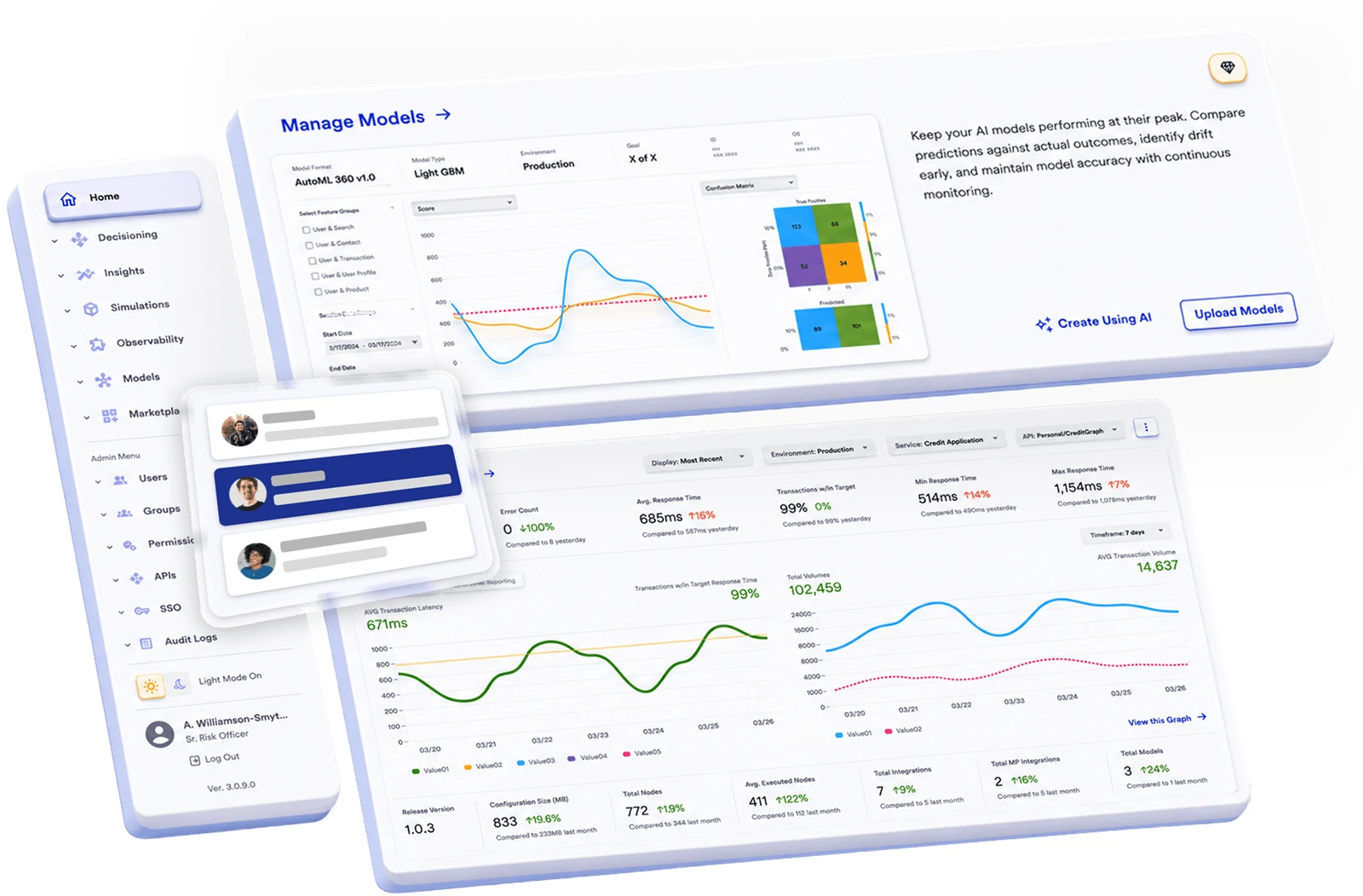
Provenir sells a cloud-native AI decisioning platform, which it relaunched in February 2026 as a Decision Intelligence Platform. Credit risk, fraud, identity verification and compliance decisions run in one environment. Its niche is orchestration for lenders with many data sources and risk tools.
Decision strategies are built and tested in a low-code editor. Through the Data Marketplace, lenders reach what the vendor counts as 120+ data partners over one API, and referrals and fraud investigations go to case management. The February 2026 release added agentic decisioning, in which AI agents work under human oversight. Requests run in real time or in batches.
Best suited for: Banks, fintechs, consumer lenders, SME lenders, embedded finance providers, and BNPL providers.
Key features:
- Low-code decision design
- AI and model orchestration
- Decision simulation
- Case management
- API-first integration
- Decision monitoring
Pros:
- 120+ data partners through a single API
- Credit, fraud and identity decisions in one environment
- Agentic decisioning under human oversight
- Real-time and batch processing
Cons:
- Decisioning layer only, so lenders still need a separate LOS
- Little published detail on individual AI agents since the February 2026 release
- No financial spreading or covenant monitoring for commercial deals
Zest AI
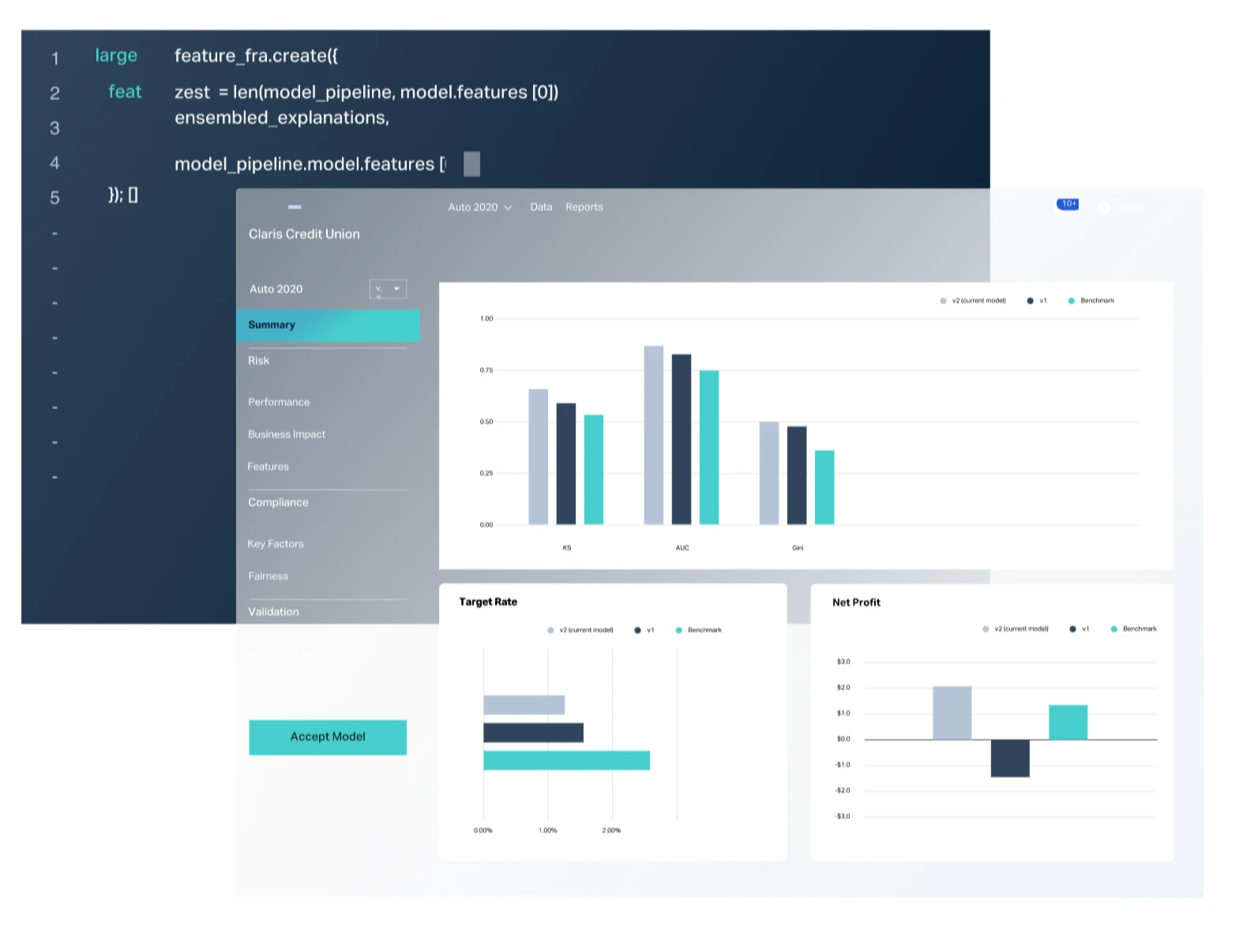
Zest AI builds AI-powered underwriting models for U.S. credit unions and banks, as well as specialty lenders. Each model is typically trained on one institution’s loan history for one product and, per Zest, uses 200 to 300 variables against 15 to 20 behind a traditional score.
The models run inside existing loan origination systems, and Zest lists around 30 LOS partners, MeridianLink and Temenos among them. Coverage is limited to consumer lending, such as auto loans and credit cards. Models ship with reason codes for adverse action notices plus documentation for model risk management and fair lending reviews. Zest Protect covers fraud, and LuLu, a GenAI lending intelligence tool, adds peer benchmarking.
Best suited for: Credit unions and community banks that want custom models without replacing their LOS.
Key features:
- Custom underwriting models
- Broad applicant data analysis
- Explainable model outputs
- Regulatory documentation
- LOS integrations
- Portfolio monitoring
Pros:
- Models trained on the lender’s own data
- Adverse action reason codes and model documentation included
- Around 30 LOS partners, including MeridianLink and Temenos
- Fraud detection (Zest Protect) and LuLu analytics as add-on products
Cons:
- Consumer credit only, with no commercial lending coverage
- Historical loan data required to train a custom model
- Score provider tied to a supported LOS, which runs the approval policy
HES LoanBox
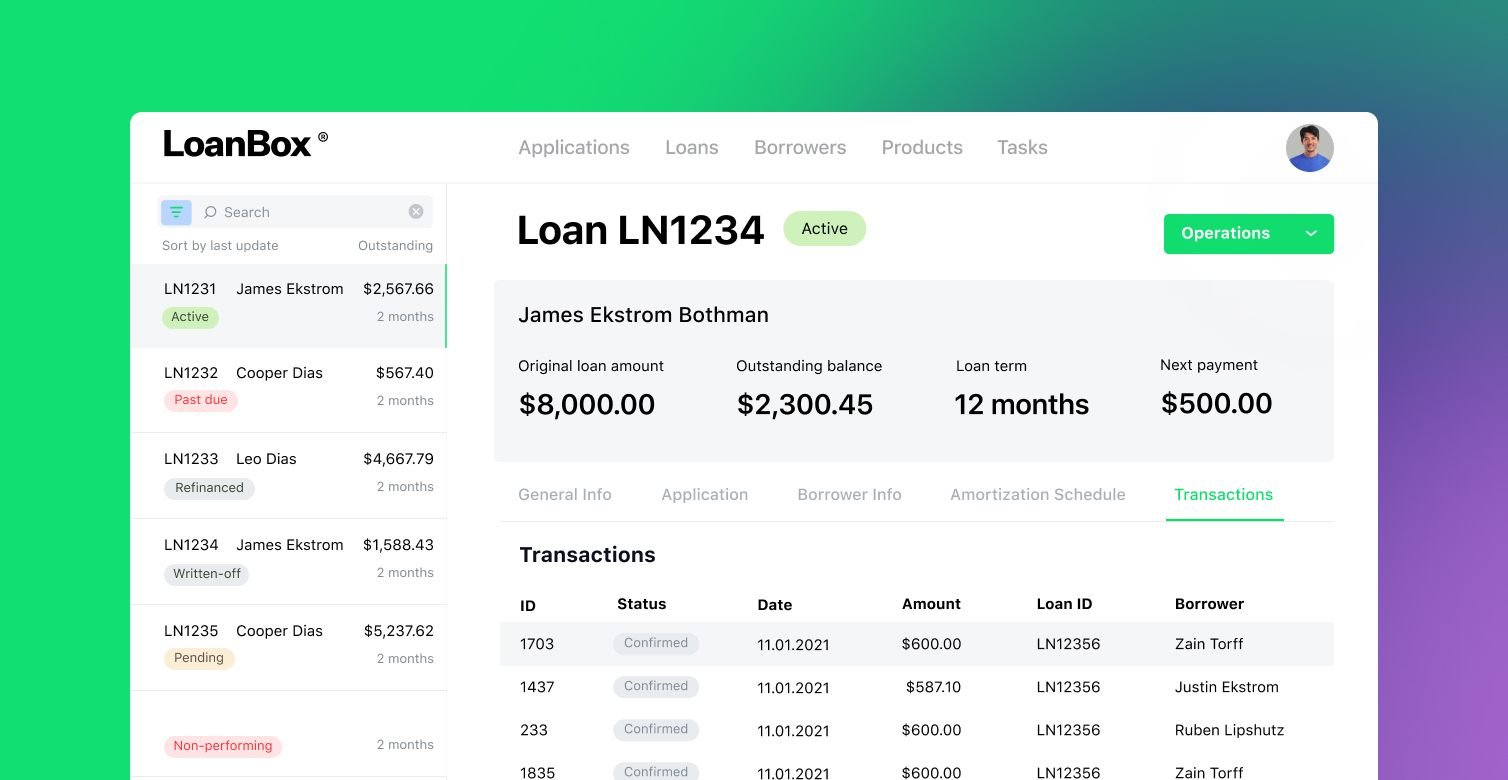
HES LoanBox is a loan management platform that runs from digital onboarding and origination through underwriting and servicing to debt collection. It suits lenders that want decisioning and servicing in one system with configurable workflows.
Underwriting rules are stored in editable DMN decision tables with version history. Scoring providers and thresholds are set per product group, as is the decision mode, which runs from manual to fully automatic. Next to the internal rules-based scoring provider, GiniMachine is available as a second provider: a separate AI-powered credit decision engine from HES FinTech, trained on the lender’s own historical loan data. For commercial deals, OCR extracts and validates tax returns and financial statements, so analysts open each deal already structured for spreading and draft the credit memo from that file. Applications are routed to a credit committee member by workload and expertise. After funding, covenant monitoring sends breach alerts. This credit decision software also covers disbursement, payments, accruals and collections.
HES FinTech is ISO 27001 certified and has completed an independent SOC 2 examination. The annual platform license starts at $39,000 with no per-user fees, and implementation is billed separately. Go-live takes from three months, and complex commercial projects can take six months or longer.
Best suited for: Banks and credit unions, plus non-bank and commercial lenders that want one system from application to collection.
Key features:
- Configurable underwriting rules
- Manual, semi-automatic and automatic modes
- Internal rules-based scoring
- GiniMachine as an ML scoring provider
- Covenant monitoring
- Loan origination and servicing
- Debt collection
- Flexible deployment
Pros:
- Rules-based and ML scoring within the same product group
- Committee routing by workload and expertise, plus covenant breach alerts
- On-premises or cloud deployment, with a hybrid option
- Published license from $39,000 per year, with no per-user fees
Cons:
- Go-live from three months, longer for complex commercial projects
- Third-party scoring providers added through customization
- Accounting integrations built as custom projects
- No documented global cash flow analysis
ACTICO Credit Risk Platform
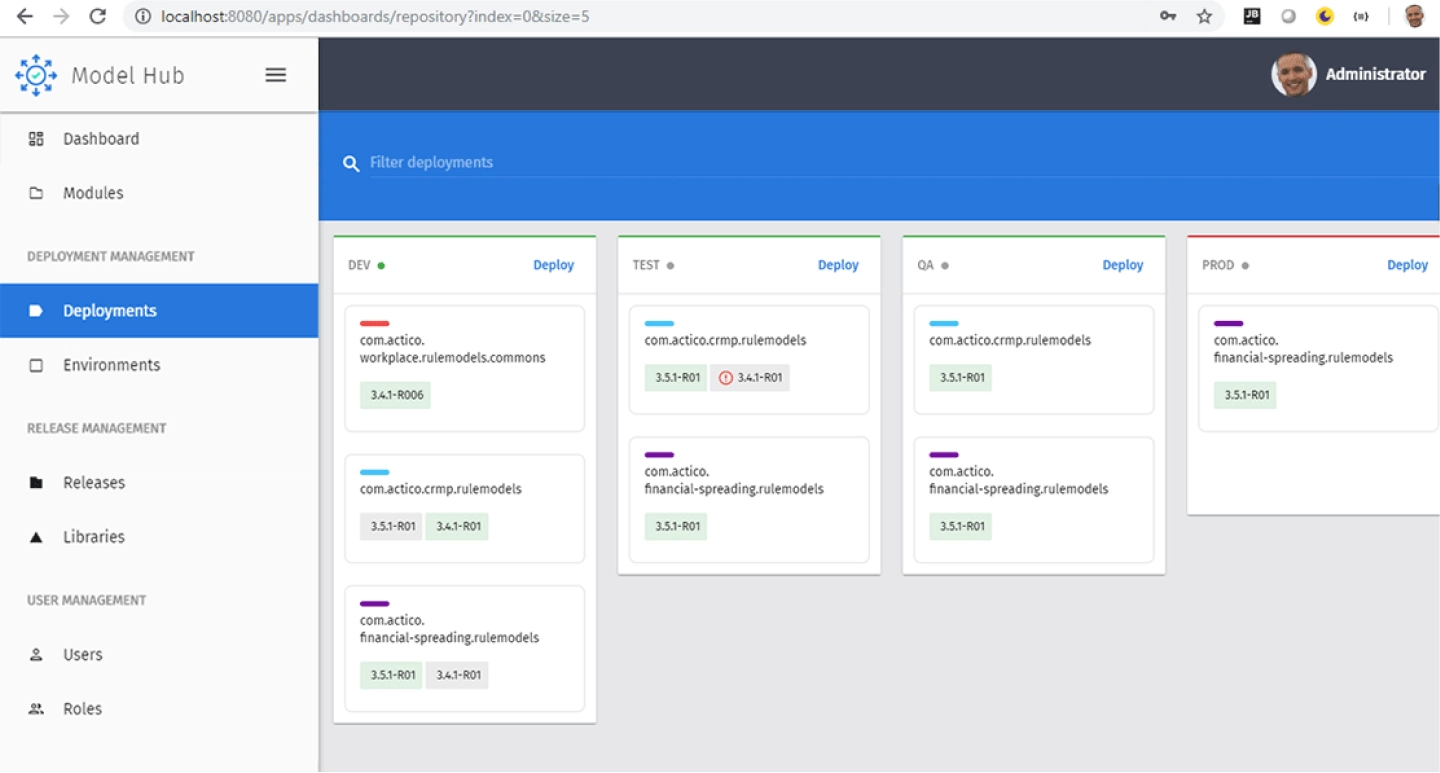
ACTICO Credit Risk Platform is built for commercial and SME credit risk assessment. Banks use it for financial spreading and internal risk ratings, and it runs multi-stage approval workflows. External scorecards such as Scope Ratings come pre-integrated. The platform is built natively on Salesforce and runs standalone or inside an existing Salesforce org.
Financial data is extracted with OCR and generative AI into configurable spreading templates. Rating models are built from no-code rules in a graphical editor and feed role-based approvals. ACTICO’s Credit Agents prepare the financial analysis and draft an audit-ready credit memo. They also flag early warning signals. The final decision stays with the analyst, who checks each extracted spread and compares its ratios with peer data.
Best suited for: Commercial banks and corporate or SME lending teams.
Key features:
- AI-assisted financial spreading
- Financial statement analysis
- Internal rating models
- Third-party credit scorecards
- Credit approval workflows
- AI-drafted credit memos
Pros:
- AI-assisted spreading, with each extracted spread checked by an analyst
- Credit Agents that draft financial analysis and credit memos
- Pre-integrated external scorecards such as Scope Ratings
- Early warning flags on borrower risk
Cons:
- No documented covenant or collateral tracking
- No documented US tax-return spreading
- Built natively on Salesforce, a constraint for banks outside that ecosystem
- No loan servicing for funded loans
Pega Credit Risk Decisioning
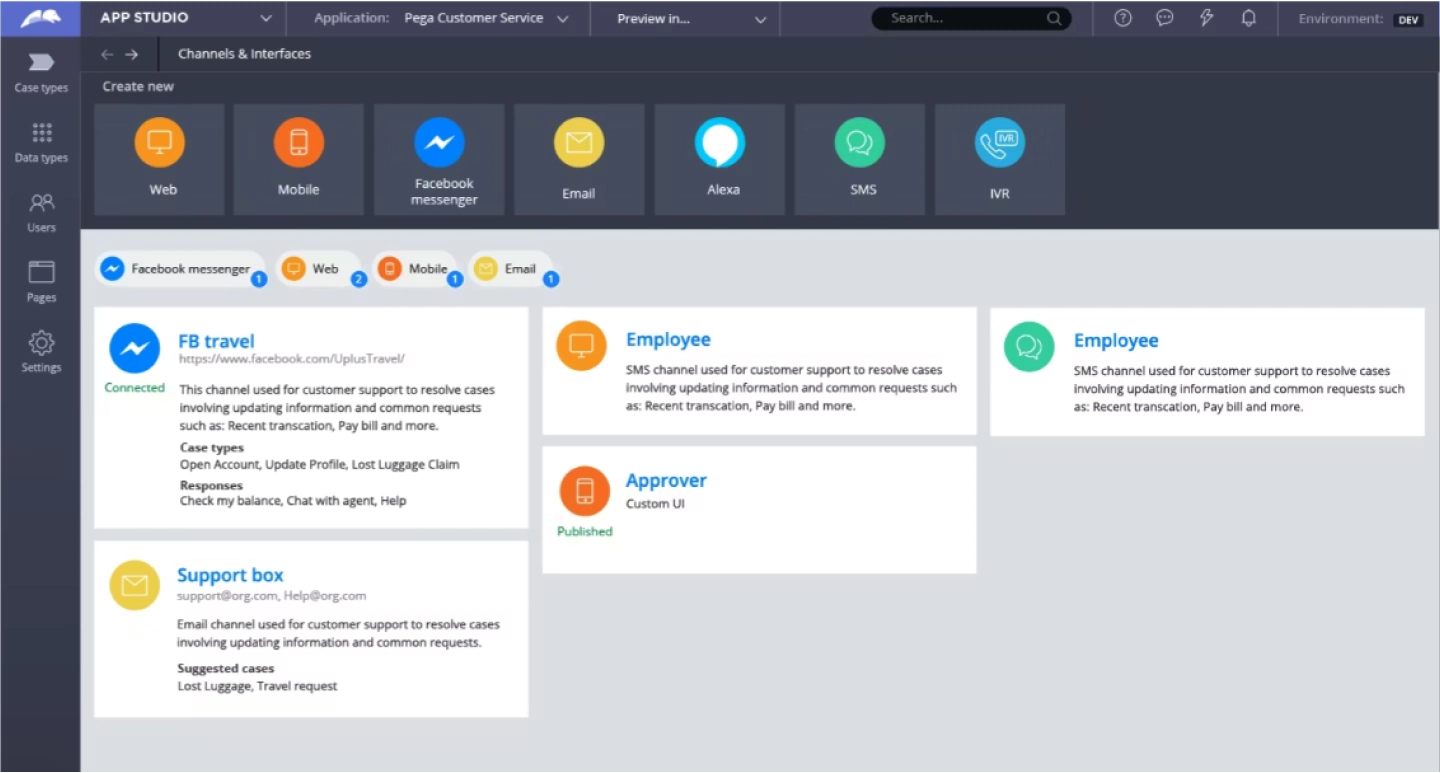
Pega Credit Risk Decisioning automates risk assessment during loan application processing. Because it runs on Pega Platform, decision logic and operational workflows share one environment. This setup fits institutions that want credit assessment connected to wider business processes.
Pega’s credit risk decisioning engine runs decision strategies. In Pega’s sample strategy for a cash loan, it returns a score segment and a risk-based price once the eligibility check passes. For commercial clients, Pega’s separate Client Lifecycle Management and KYC product covers onboarding and due diligence. Its December 2025 release added agentic AI for document processing and screening.
Best suited for: Consumer lenders and banks already running Pega Platform.
Key features:
- Configurable decision strategies
- Real-time decision processing
- Batch decision processing
- Decision management
- Case management
Pros:
- Strategy simulation before deployment to live applications
- Credit decisioning inside existing Pega workflows
- Real-time and batch processing
- Case management for referrals and applications that need review
Cons:
- Consumer-lending sample content, with few commercial credit examples
- Pega-skilled developers needed for configuration and maintenance
- Delivered as an accelerator on Pega Platform, not as a standalone product
- Servicing and collections sold as separate Pega products
Lendflow Intelligence
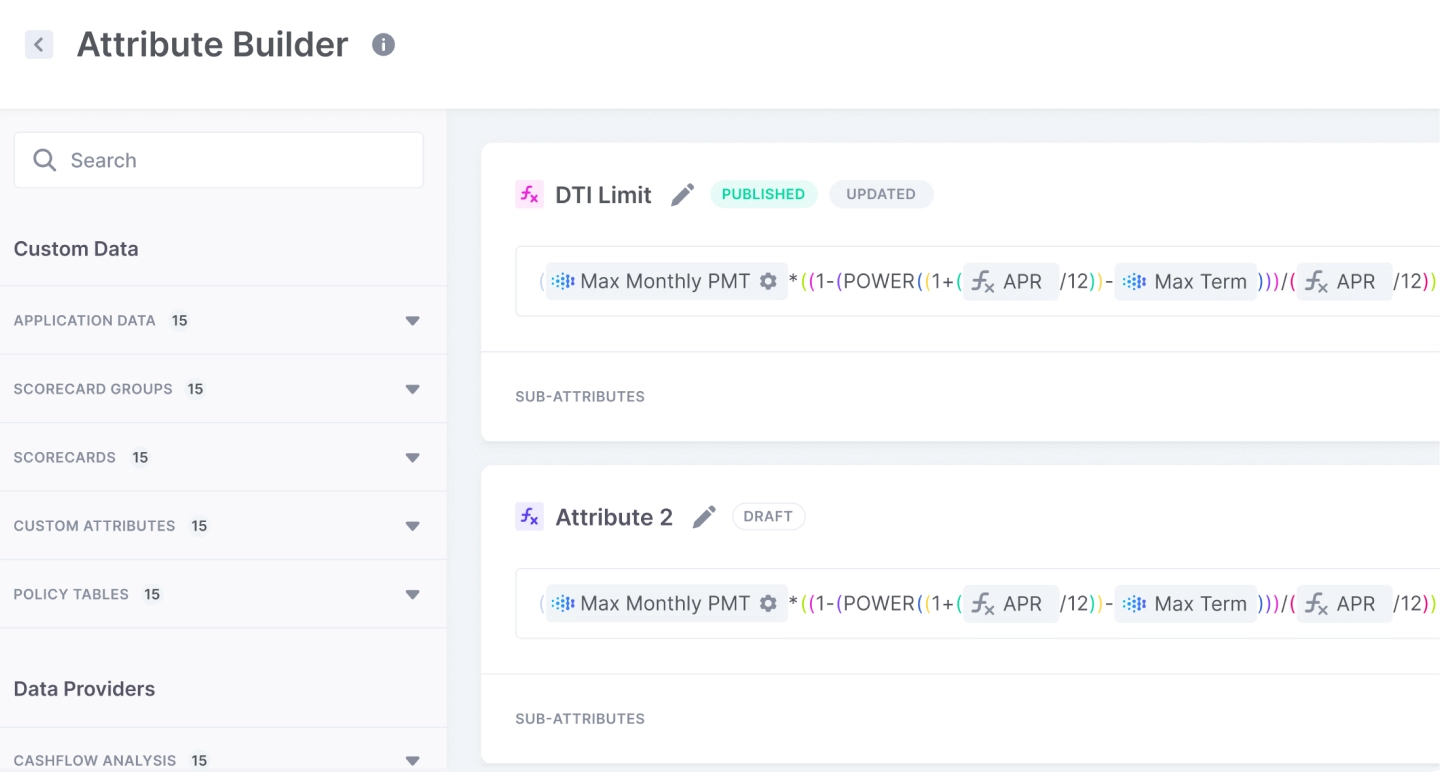
Lendflow builds embedded lending infrastructure for the US market. It serves lenders and the SaaS or marketplace brands that offer financing. Of Lendflow’s three modules, this review covers Intelligence, where decisioning runs. Connect handles distribution to the SaaS and marketplace brands, and Automate adds AI agents. The product set is small business only: term loans, credit lines, factoring, merchant cash advances and SBA 7(a) loans.
One API connects Intelligence to banking, business credit, fraud, accounting and payroll data, and conditional triggers decide what gets pulled for each deal. Lenders build their own scoring or start from Lendflow templates, then A/B test product-specific scorecards. On the Automate side, an agent extracts data from bank statements and tax returns.
Best suited for: Embedded finance providers, alternative lenders, SME lenders, and lending marketplaces.
Key features:
- Unified data access
- Custom underwriting workflows
- Product-specific scorecards
- A/B testing
- Embedded lending connectivity
- AI document extraction
Pros:
- One API for banking, credit, fraud, accounting and payroll data
- Scorecard A/B testing across lending products
- Two-to-four-week launch, per the vendor
- Coverage of SBA loans, factoring and merchant cash advances
Cons:
- US market only
- Small business focus, with no consumer or large corporate lending
- Built around embedded and marketplace lending, not standalone bank decisioning
- Document extraction without financial spreading or covenant monitoring
Credit Decisioning Software Comparison Table
The table compares the eight credit decision engines and platforms by key strength, commercial underwriting coverage, AI capabilities, lifecycle coverage, and pricing transparency.
| Software product | Key strength | Commercial underwriting coverage | AI capabilities | Lifecycle coverage | Pricing |
|---|---|---|---|---|---|
| FICO Platform | Enterprise decision management with predictive analytics and business rules | Small Business Scoring Service (SBSS) for business credit; no financial spreading or covenant monitoring | ML-based (predictive analytics and model deployment) | Application to decision | Not published; custom quote (private offer only on AWS Marketplace) |
| Experian PowerCurve Originations | Pre-connected Experian bureau data with business-user rule editing | Limited: UK commercial bureau data on Ascend; no spreading or covenant monitoring | ML-based (analytics and scoring; agentic AI layer announced for Ascend) | Customer acquisition and credit application processing | No list price on product pages; pricing documents only in the UK public-sector G-Cloud catalogue |
| Provenir AI Decisioning Platform | Credit, fraud and identity decisions in one environment, with 120+ data partners over one API | Serves SME lenders; no financial spreading or covenant monitoring | Advanced (AI and model orchestration, agentic decisioning) | Decisioning layer only; a separate LOS is needed | Not published; quote on request |
| Zest AI | Custom underwriting models trained on the lender’s own loan history | None: consumer credit only | Advanced (AI underwriting models, LuLu GenAI tool) | Scoring inside the lender’s existing LOS, which runs the approval policy | Not published; quote on request |
| HES LoanBox | Decisioning and servicing in one system with configurable workflows | OCR extraction of tax returns and financial statements, credit memo file, committee routing, covenant monitoring; no documented global cash flow analysis | ML-based (rules-based scoring plus GiniMachine ML scoring) | Full: onboarding, origination, underwriting, servicing and debt collection | Published: annual license from $39,000, no per-user fees; implementation billed separately |
| ACTICO Credit Risk Platform | Commercial and SME credit risk assessment with financial spreading and internal ratings | AI-assisted spreading, internal rating models, AI-drafted credit memos, early warning signals; no documented covenant or collateral tracking | Advanced (generative AI spreading, Credit Agents) | Credit analysis and approval workflows; no loan servicing | Not published for this product; ACTICO lists prices only for its Decision Management Platform |
| Pega Credit Risk Decisioning | Credit decisioning inside existing Pega Platform workflows | Few commercial credit examples; onboarding and due diligence in the separate Client Lifecycle Management and KYC product | Rules-led (decision strategies; agentic AI in the separate Client Lifecycle Management and KYC product) | Risk assessment during application processing; servicing and collections sold as separate products | Not published; quote on request |
| Lendflow Intelligence | Embedded small business lending with one API for banking, credit, fraud, accounting and payroll data | Small business only: bank statement and tax return extraction, SBA 7(a) loans; no financial spreading or covenant monitoring | Rules-led (scorecards; AI agent for document extraction) | Decisioning (Intelligence), with distribution and AI agents in separate modules | Pricing models listed (transaction fee, software fee, % of revenue) but no figures; quote on request |
“Advanced” means machine learning plus generative or agentic AI available today in the decisioning or scoring layer. “ML-based” means machine learning without released GenAI for credit decisions. “Rules-led” means rules and scorecards, with AI in supporting tasks. If AI is the priority, the best AI credit decisioning platforms in this list are the ones marked “Advanced” in the AI capabilities column: Provenir, Zest AI, and ACTICO.
Commercial Credit Underwriting: Key Processes
Commercial credit underwriting assesses whether a business can repay a loan and how much risk the deal carries. The work covers financial statement and tax return analysis, cash flow work, collateral evaluation and an internal risk rating. Most decisioning engines manage the workflow around these tasks, and far fewer perform the analysis. This difference separates the vendors reviewed below.
Tax Return Analysis and Consolidated Cash Flow
Underwriters usually review IRS Forms 1065 (partnerships), 1120 (C corporations), and 1120-S (S corporations). Schedule K-1, issued by partnerships and S corporations, shows how income passes to each owner.
When a borrower owns several businesses, lenders build a global cash flow analysis: cash flows from financial statements, tax returns, K-1s and bank statements across related entities, net of the owners’ personal debt and any contingent liabilities.
Who covers it: HES LoanBox and Lendflow extract tax return data, and ACTICO spreads financial statements. None documents global cash flow analysis.
Risk Rating and Credit Memorandum
The financial review ends in an internal risk rating that adds qualitative factors to the borrower’s repayment capacity. The rating decides who has to approve the loan and how it is structured and priced. It also sets how closely the loan is watched after funding.
Underwriters document their findings in a credit memorandum: the borrower’s financial position, loan purpose and structure, repayment sources, key risks, proposed terms, and the underwriter’s recommendation. The committee reads the memo before it votes, and the decision is recorded against it.
Loans above an officer’s delegated lending limit go to a higher authority or the credit committee.
Who covers it: ACTICO’s Credit Agents draft the memo. HES LoanBox builds the memo file and routes applications to committee members. The other six leave memo work to other systems.
Collateral Valuation and SBA Lending
Collateral is the secondary source of repayment. Lenders check its value and ownership and look for existing liens. Real estate usually needs an appraisal.
SBA 7(a) lending runs the same repayment analysis with SBA eligibility and documentation rules layered on top. The participating lender underwrites the loan itself. The SBA guarantee limits the lender’s loss but does not replace the credit assessment.
Who covers it: Lendflow supports SBA loans, and HES LoanBox tracks collateral conditions alongside covenants. None of the eight offers collateral valuation tools.
Covenant Monitoring After Approval
Commercial loan agreements often carry financial covenants, most commonly a minimum debt service coverage ratio and a maximum leverage ratio.
Risk monitoring relies on periodic financial statements and borrower reporting. A breach triggers a review. The lender can waive it or amend the terms; enforcement under the loan agreement is the last resort. At portfolio level, portfolio monitoring picks up concentrations and trends across groups of borrowers.
Who covers it: HES LoanBox documents covenant monitoring with breach alerts, and ACTICO’s agents flag early warning signals. The other six do not describe covenant tracking.
Expert Perspective

Regulatory Requirements for AI in Commercial Credit Underwriting
Using AI in commercial credit underwriting raises questions of model governance, fair lending, adverse action notices, and small business lending data. A decisioning system helps lenders document and apply their credit policies, but responsibility for compliance remains with the institution. The rules below are US-specific.
AI Model Risk Management
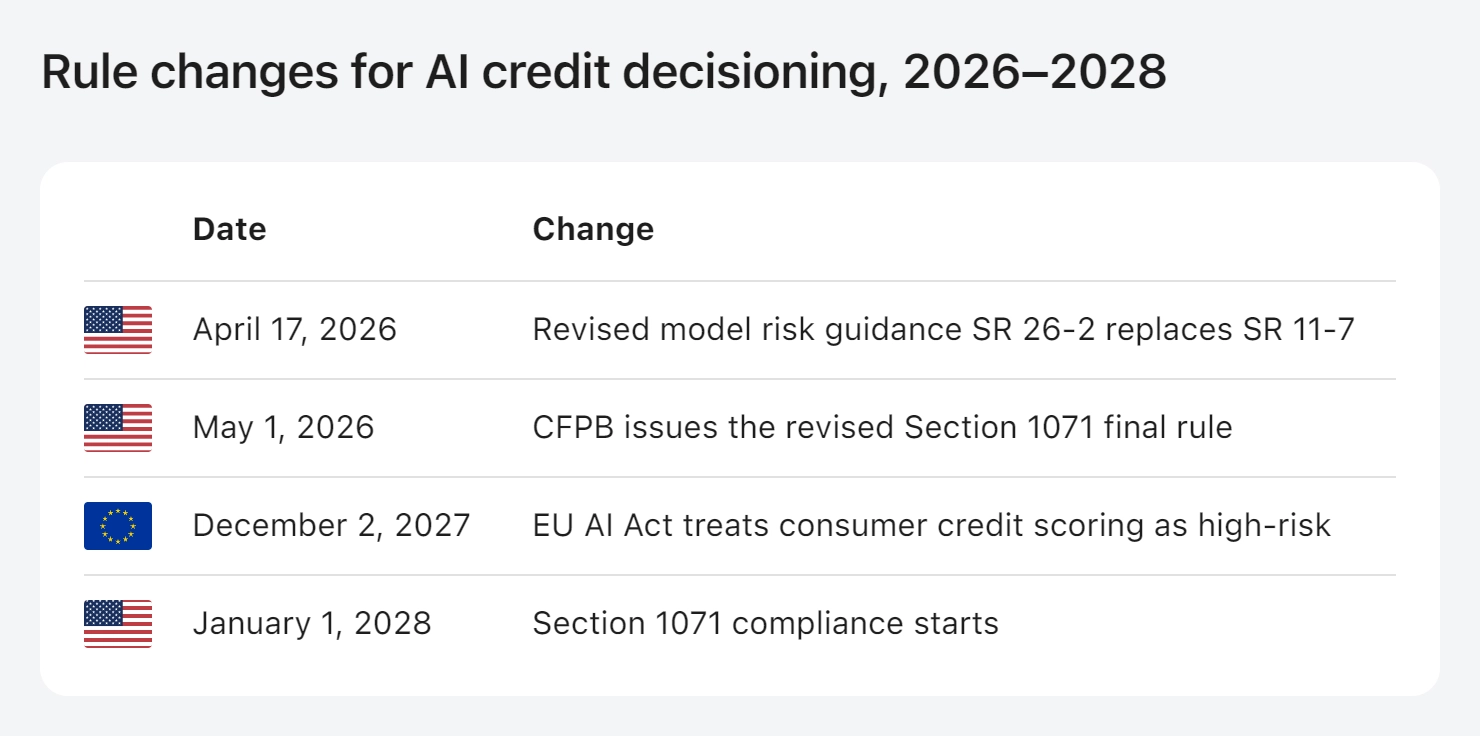
On April 17, 2026, the Federal Reserve, OCC, and FDIC issued revised interagency guidance on model risk management (SR 26-2 at the Fed). It rescinds the 2011 guidance, SR 11-7 and OCC Bulletin 2011-12. Controls are meant to scale with how material a model is, and the agencies describe the guidance as most relevant to banks above $30 billion in assets. The guidance covers vendor models but excludes generative and agentic AI models.
In practice, this means documented assumptions, performance testing, change reviews and human review of cases outside set thresholds. Because vendor models are in scope, lenders should ask each vendor what validation documentation it supplies.
ECOA, Regulation B, and Adverse Action Notices
The Equal Credit Opportunity Act (ECOA) and Regulation B prohibit discrimination in credit transactions, business credit included. A lender that scores applications automatically has to show that the system meets both its fair lending obligations and the notice rules.
When a creditor takes adverse action, Regulation B requires specific reasons that reflect the principal factors considered or scored. “Failure to meet internal standards” does not qualify. The rule makes no exception for complex models. Lenders need decision records and explanations that match the model’s real output.
For business applicants with gross revenues above $1 million, the creditor notifies the applicant within a reasonable time, orally or in writing, and provides written reasons if the applicant requests them in writing within 60 days.
Section 1071 and Small Business Lending Data
Section 1071 of the Dodd-Frank Act amended ECOA to require covered financial institutions to collect and report data on small business credit applications.
The CFPB issued a revised final rule on May 1, 2026. Only lenders with at least 1,000 covered originations in each of the two preceding years fall under it, and a small business now means $1 million or less in gross annual revenue. Compliance starts on January 1, 2028.
The revised rule keeps the firewall requirement, which generally bars staff involved in credit decisions from seeing applicants’ demographic data.
How Credit Underwriting Data Relates to CECL
The Current Expected Credit Losses (CECL) methodology, established under FASB ASC Topic 326, requires institutions to estimate expected credit losses over the contractual life of financial assets measured at amortized cost. The estimate looks back at loss history and forward through reasonable and supportable forecasts, adjusted for current conditions.
Underwriting data and internal risk ratings feed that estimate, but a decisioning system does not replace the institution’s CECL methodology or accounting controls.
Main Benefits of Credit Decisioning Software
For a lender, the best credit decisioning software changes six things.
1. Faster credit decisions
Automatic credit decisioning software collects and checks application data without manual steps. By the time an underwriter opens the file, missing documents and failed policy checks are already flagged.
2. Reduced manual workload and lower risk of errors
The platform takes over document sorting, ratio calculations, bureau data pulls and requests for missing details. With less manual data entry, underwriters make fewer keying errors.
3. Better-quality credit assessments
Open banking transactions add cash-flow detail to bureau data, so the lender sees how a borrower manages income and payments over time instead of relying on a single score.
4. Stronger compliance and auditability
The software logs each step of a decision, which gives examiners an audit trail for ECOA and Regulation B reviews. Modern credit decision software also makes ML models explainable, so lenders can show regulators how a score was produced and give applicants clear reasons for a decline. These records and explanations matter in the EU as well, where the AI Act treats consumer credit scoring as high-risk from December 2, 2027.
5. Higher customer satisfaction
Borrowers get answers sooner and are asked less often for documents they have already sent. A shorter, less repetitive process means fewer applicants abandon the application before a decision.
6. Stronger portfolio security
Some advanced credit decisioning solutions include fraud detection that flags mismatched details and unusual transaction patterns. Documents that contradict known data sources are flagged as well, and suspicious applications are stopped before funding.
Conclusion
The best credit decisioning software shortens the time to a decision and makes compliance easier to demonstrate. Suspicious applications are caught before funding, and the manual checks that remain are the ones an underwriter should be doing anyway. Borrowers hear back sooner.
In commercial lending, vendor evaluation should also establish which parts of underwriting the product performs itself and which it only routes to people or other systems. That answer shows how much analyst work the software takes on.