HES LoanBox for Working Capital is a dedicated software solution for originating and servicing working
capital loans. Manage lines of credit, invoice finance, and asset-based lending from a single platform.
Score thin-file small businesses on cash-flow and bank-statement signals, so credit
decisions on revolving facilities hold up far better than manual review.
3x
scoring accuracy
Spot weakening borrowers early as AI scoring tracks each facility, holding non-performing
loans down across the short tenors typical of revolving credit.
40%
fewer NPLs
Automation runs intake, KYB, drawdown, and document checks, so a small team funds many more
applications without the handoffs that stall deals.
44%
staff efficiency
Working capital finance software
across the full lending cycle
Fast business onboarding
Business owners apply in minutes through a white-label application portal that loads cleanly on
desktop and mobile.
The flow
walks each applicant through eligibility, application, and financial uploads, with KYB
verification, automated data validation, and document processing running underneath.
Cash-flow underwriting
Pull cash-flow signals straight from bank statements and accounting feeds, then decide each
facility through configurable underwriting and AI scoring.
Lines of credit, invoice finance, and asset-based products each carry their own limits,
advance rates, and pricing.
Facility servicing
Handle drawdowns, redraws, repayments, and borrower messaging from one platform built for
revolving facilities.
Watch
utilization, keep borrowing bases in view, and fire renewal triggers on time as exposure shifts.
Structured recovery
On overdue facilities, automated outreach and early arrears signals drive recovery, while
restructuring options bend to fit the borrower's cash-flow position.
Estimate your
working capital software in 3 minutes
STEP:
/
Online onboarding
Working capital loan software that turns applications into funded
facilities
An SME that needs cash this week will not wait on paperwork. Give owners a fully digital route to
working capital, and hand your team automation that decides more applications with far less hands-on
work.
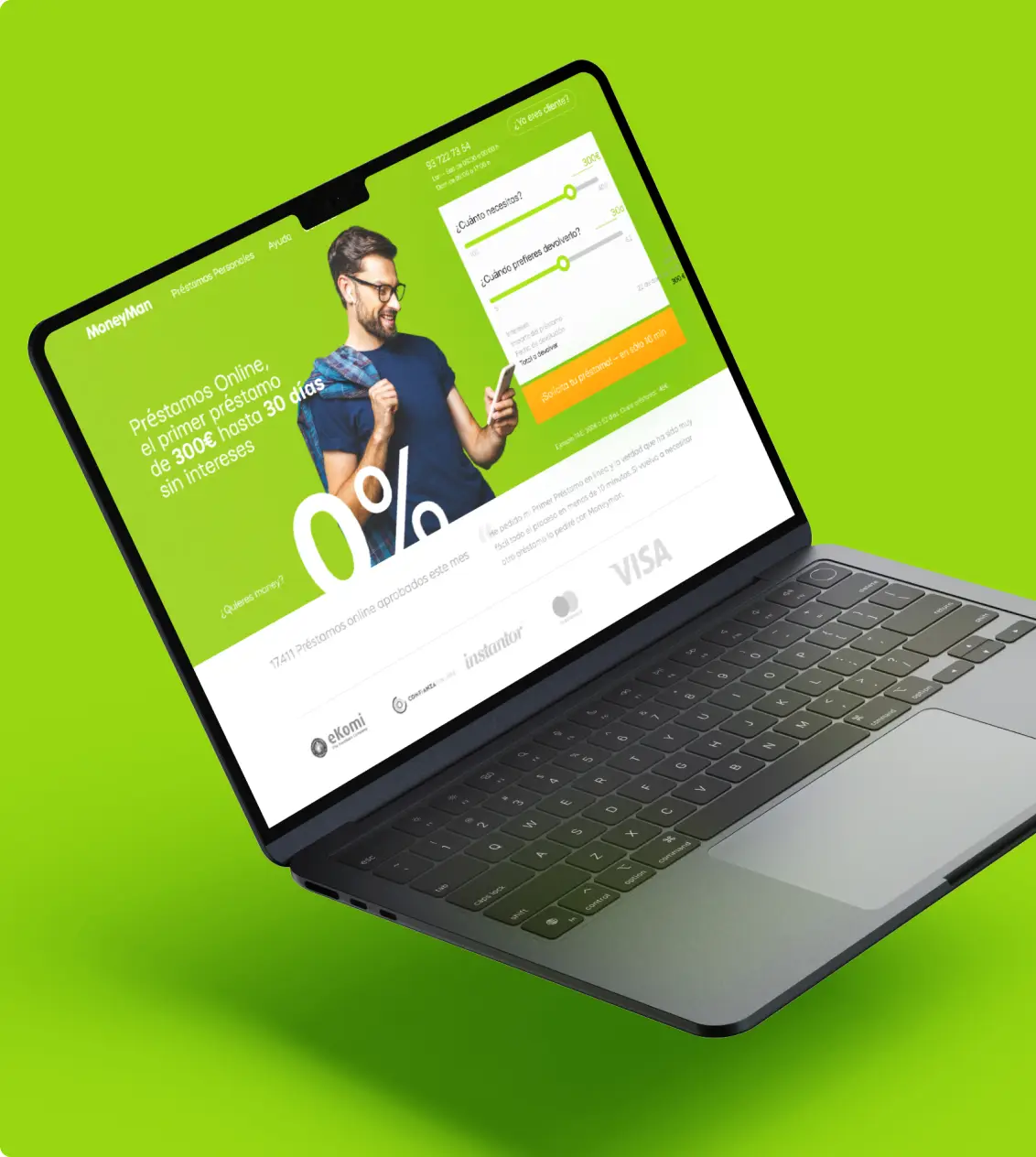
Let owners model facility size, rate, and repayment with an in-page calculator
before they ever start the form. Seeing the likely cost up front lifts completion
and cuts the abandoned applications that kill funnels.
Fund faster with automated decisioning
Owners share business details, upload bank statements and financials, and sign
online, no branch visit needed. Working capital loan software runs KYB and cash-flow
decisioning in the background, pulling approval from days down to minutes.
Keep borrowers active with self-service
Give each business its own HES LoanBox portal to follow drawdowns, see the limit
still available, and repay in seconds. Reminders by text and email cut late payments
and keep the relationship warm between renewals.
Grow through partner channels
Most working capital volume comes through introducers, so give them a portal to
lodge deals and watch each approval for the clients they refer. Origination scales
on partner reach, not on new branches or extra headcount.
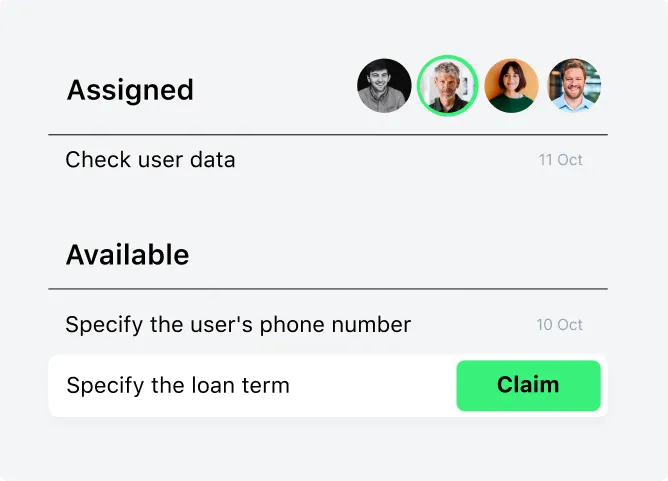
Keep working capital teams aligned with task management
No application sits waiting for free hands. Work routes to the right owner by load, slipping SLAs
flag themselves, and everyone on the deal works from one shared queue.
Loan origination
Underwrite working capital faster
with AI-driven origination
Manual review is where working capital deals stall and weak credits slip in. Put AI behind both the
checks and the credit call, and each facility request turns into a fast decision you can stand
behind.
KYB, sanctions, and director screening clear in seconds. From there each applicant
fills out with bureau files, bank-feed data, and accounting signals, so underwriting
starts from a full, audit-ready view of the business.
Underwriting that runs at your pace
Send each facility down a fully automated path, a hybrid review, or a manual desk,
set by deal size and risk band. The HES LoanBox underwriting engine follows whatever
credit policy you set, not a fixed track.
Approve the deals others pass on
Layer AI scoring over your own rules to back thin-file businesses that competitors
decline. Custom scorecards or the built-in engine let you write more facilities
while holding non-performing loans down by up to 40%.
GiniMachine scoring that keeps learning
Every facility you close feeds GiniMachine. It studies how loans actually performed,
picks up shifting risk signals, and rebuilds its models without a data-science team,
and accuracy keeps climbing as fewer good borrowers get turned away.
Paperless from request to signature
Paper leaves the facility journey from request to close, cutting document handling
costs by up to 90%. OCR pulls and checks financials, IDs, and statements on the
spot, then eSignature wraps the agreement with nothing to print.
and much more
Configure any product
Stand up any working capital product the market asks for: revolving lines, invoice finance,
asset-based facilities, term advances. Rates, fees, advance rates, and eligibility get set
per product, segment, or partner, no developer required.
Contracts generated on the fly
Dynamic templates with merge fields turn out binding facility agreements on demand. Fewer
drafting slips, faster funding, and one consistent, audit-ready paper trail wherever you
lend.
Notification templates that fit
Set up message templates for SMS, email, and push, each with dynamic fields, so every
borrower touchpoint runs itself, from status and approval to repayment nudges, drawdown
alerts, and renewal offers.
Role-based access and security
Lock down borrower and business data through role-based permissions, password policy
controls, and two-factor sign-in. A complete, audit-ready log captures who touched what,
user by user.
Reach borrowers on any channel
Fire outreach by SMS, email, or in-app message off borrower activity and facility status.
Businesses stay engaged the whole way through, and your support desk carries less.
Build workflows without code
Draw and tweak working capital workflows yourself, visually, with no engineers in the mix.
Sketch the application path, wire up approval logic and conditional branches, and put a new
process live within days.
Implement a smart scoring system
Scoring
Scoring model
For any financial institution
Deferred payment
Asset-based
Invoice
Flexible deferred payment options
HES end-to-end SME working capital finance software offers a range of customizable
payment terms, allowing you to extend payment periods up to 180 days. The platform lets
you quickly and easily customize the ideal deferred payment plan for your customer
business needs, thus providing more control and flexibility.
Multifaceted asset-based lending
Provide balance sheet assets financing to enable a flexible source of working capital.
Offer revolving credit lines and secure term loans, with advance rates determined based
on key factors like collection history, asset liquidation values, management comfort,
and overall financial health. Tailor lending solutions to support the refinancing of
long-term assets, funding capital expenditures, procuring equipment or real estate, or
facilitating long-term asset amortization.
Full-cycle invoice financing
Enable SMEs to access flexible working capital by financing accounts receivable. Tailor
the percentage of the invoice value to meet their specific business requirements and
help them stay in control of their cash flow. Deliver an all-inclusive lending process
from start to finish, including customer onboarding, loan origination, decision-making,
disbursement, calculation, and loan closure.
95%
faster credit decisions
Loan servicing
Servicing built for working capital facilities
Servicing spread across four tools means month-end reconciliation and quiet margin leakage. Pull the
whole facility into one workspace that already holds live balances and payments, and that overhead
goes away.
Each facility runs to your own rules once it goes live. Accruals, fees, redraws,
renewals, and early repayments settle automatically, so there are no spreadsheets
and no month-end scramble.
Every product in one workspace
One HES LoanBox workspace holds every product you run, lines of credit, invoice
finance, asset-based facilities, term advances. Limits reset, schedules shift,
balances restructure, and partial repayments post in the moment, with a full history
behind every change.
One view of every borrower
Every business sits on one screen: its applications, open and closed facilities,
paperwork, conversations, and where its risk stands now. Queries get answered first
time, cross-sell shows up, and renewals happen before a line lapses.
Payments wired in
Funding goes out and repayments come back through pre-integrated gateways, ACH,
SEPA, card networks, and direct debit. Retries and dunning run by your own rules,
ledgers stay reconciled, and security holds to ISO 27001 and SOC 2.
Protect working capital margins
with AI risk intelligence
Scoring you can explain
Predictive scoring runs the length of the facility, pre-screening through NPL forecasting.
Each output is transparent enough to explain and stands up to audit.
Sharper credit calls
Bring AI into every facility decision and read business risk with up to 3x the accuracy of
traditional scorecards.
Stay ahead of defaults
Tune risk thresholds to your policy, catch weakening facilities before they slip, and
reprice to keep the working capital book in profit.
Loan collections
Lift recovery on overdue
working capital facilities
Chasing arrears by hand is slow, costly, and quick to sour a client relationship. Let AI drive
outreach, prioritization, and fees, predicting who will pay, picking the right channel, and keeping
recovery within the rules.
HES LoanBox lightens the manual load and pushes every overdue facility forward.
Run outreach across SMS, email, and voice from one place
Generate, sign, and file recovery notices on the fly
Set pre-built or custom recovery paths per arrears bucket
Make every action data-driven
Drop the one-rule-for-all approach and tailor recovery to each borrower.
Match the outreach approach to each borrower segment
Hand timing, channel, and message to AI
Score accounts so the team works the highest-recovery ones first
Forecast repayment odds and expected cash inflows
Stop arrears before they start
Keep borrowers current with proactive, multi-channel nudges that get read.
Build reminder schedules with messaging tuned per borrower
Follow what gets delivered, opened, and answered
Reach businesses by SMS, email, push, voice bot, or your own channel
Penalties that stay inside the rules
Charge late fees and interest only up to the limits that apply, and keep a clean
trail for any review.
Cap fees and interest by product and market
Apply penalty rules consistently across the book
Keep borrower communication clear and records audit-ready
Working capital reporting and analytics
Build dashboards on the working capital metrics your desk runs on: utilization, advances, arrears,
exposure. HES LoanBox exports raw numbers, takes custom measures, and cuts the book by product,
segment, or vintage.
Your working capital stack, wired into 100+ integrations
The tools a working capital desk relies on, accounting and bank feeds, business bureaus, KYB and
sanctions, payments, comms, analytics, all plug into HES LoanBox, with flexible options and room to
customize each.
Why lenders choose our
working capital loan software
Unlimited customization
Configure products, adjust forms and workflows, add modules, and link any service you need,
from accounting feeds to bureaus.
Transparent pricing
HES LoanBox keeps pricing simple: license the platform, then pay extra solely for custom
work. Every internal user and borrower is included.
3-month product launch
Three months from kickoff to a live working capital book. Reach ROI faster on a platform
that ships ready to run.
Industry expertise
Our analysts carry 14+ years in SME and business lending across emerging markets, Europe,
and the US. Built by lenders, for lenders.
Proven security
ISO 27001 and SOC 2 certified, with hosting on AWS or Google Cloud and a hardened Java LTS
stack kept current.
Dedicated support
Specialists who know lending stay on hand and respond quickly, on your schedule.
Security
Deployment
Tech stack
Layered
security
ISO 27001 and SOC 2 certification plus a controlled SDLC hold security
steady across operations, backed by audit logs, role-based permissions, full
data encryption, and hardened hosting.
HES LoanBox installs on-premises, on AWS or Google Cloud, or on any private
cloud you prefer.
Open-source backend stack
HES LoanBox is built on an open-source foundation, Java LTS, BPMN 2.0,
Camunda, and the Form.io modeler. You pay no licensing fees other than the
platform source code, and you own the code with no lock-in.
The 2026 reality of
working capital lending
60%
of firms sought funding last year
Sixty percent of small firms
applied for financing in the year to late 2025, most of it to cover operating expenses
(Federal Reserve, 2026). Working capital is what they need most.
1 in 3
applicants still face a funding gap
Around
one in three applicant firms
still faced a funding gap, getting less than they asked for (Federal Reserve, 2026). Slow,
manual underwriting leaves money on the table.
29%
of applicants now use fintech lenders
Online and fintech lenders
drew 29% of applicants by 2025, well above their 17% share in 2020 (Federal Reserve, 2026).
Borrowers now expect a faster digital experience.
80%
of SMB lenders report rising fraud
Over 80% of SMB lenders
report a roughly 14% jump in fraud over the past year, concentrated in digital channels
(LexisNexis, 2024). KYB and identity checks are not optional.
Success stories
HES FinTech has been our reliable technology partner since 2012. I believe much of our success is due to the well-architected HES LoanBox solution.
Think of it as the operating system for short-term business credit. One platform takes a
working capital facility through its whole life: onboarding and KYB, a credit decision built
on cash flow and financial statements, day-to-day servicing of the drawn and undrawn
balance, and recovery if repayment slips. The products underneath can be revolving lines,
invoice finance, or asset-based lending. Banks, credit unions, and independent lenders reach
for it instead of wiring four separate tools together for each stage. HES LoanBox sits in
this category and was designed for teams carrying real working capital volume.
What is the difference between working capital lending software and a loan origination
system (LOS)?
An origination system stops at funding. It takes an application, runs approval, and books
the facility, then hands off. Working capital software keeps going past that point, covering
drawdowns and repayments, limit and renewal reviews, restructuring, and the portfolio view
across the whole book. Buy origination by itself and you usually bolt a servicing tool
beside it, then another for recovery, and spend the next year reconciling them. The pull
toward end-to-end working capital platforms, HES LoanBox among them, is mostly about killing
those handoffs and the silos they create.
How do I choose the right working capital lending software for our business?
Two questions point you at the answer. First, where does the work pile up today: at the
front, where slow offers cost you applicants, or after funding, where renewals and facility
reviews swallow the team? Weight the platform toward whichever side hurts. Second, what will
the five-year bill actually be? That turns on how far products bend across lines of credit,
invoice finance, and asset-based lending, how the system ties into your core, bureaus, and
accounting data, how fast it goes live, and whether the price is charged per seat. HES
LoanBox earns a look when a lender wants one configurable platform covering both ends,
though the honest answer rests on where your own pain sits.
How long does working capital lending software take to implement?
It depends almost entirely on the starting platform. Older enterprise systems can stretch
past a year and a half and tie up an in-house IT team plus outside consultants for the
duration. A cloud-native platform that arrives with prebuilt workflows and connectors
removes most of that. With HES LoanBox, a typical lender is live in roughly three months,
because the workflows for lines of credit, invoice finance, and asset-based facilities
already exist, alongside connectors for business bureaus, KYB, accounting tools, and
payments. Add several products, multiple regions, or unusual rules and the clock runs
longer, which discovery makes easy to scope upfront.
How does working capital lending software help with credit risk and compliance?
Good platforms run them on a single rail. For risk, financials, exposure, and scoring sit in
one view of the whole book, so a deteriorating borrower surfaces long ahead of the next
manual review. HES handles the scoring with GiniMachine, trained on your own book rather
than a generic model. For compliance, actions are logged, documents are tracked, and
permissions keep origination and servicing apart, with ISO 27001 and SOC 2 controls
underneath. What you get is a calmer examination cycle and a clear, defensible trail when
anyone needs to see why a particular facility was approved.
How much does working capital lending software cost?
No single number fits, because cost tracks portfolio size, product count, deployment choice,
and how much integration you need. The old model was a heavy annual license plus a charge
per seat, sitting on top of a large build budget. Newer platforms bill by volume or by
module on subscription. HES LoanBox keeps it to a license fee with no seat-based charges, so
adding analysts, operators, or borrowers does not move the price. Anything custom is scoped
and quoted on its own. A short discovery call usually pins the full figure once we see your
product mix, volume, and integration needs.
Does HES LoanBox integrate with our core banking system?
Yes. It is built API-first and slots into the stack a lender already operates. That spans
the core banking system, business credit bureaus, KYB and sanctions screening, open banking
and accounting feeds, payment gateways, e-signature and document tools, and reporting
platforms, through more than a hundred ready connectors and open APIs where something
bespoke is needed. How much work it takes hinges on your core and the number of neighboring
systems, but the destination is the same every time: information passes between tools
through the integration layer rather than riding spreadsheets from desk to desk.
Book a demo
HES FinTech has been our reliable technology partner since 2012. We owe much of
our success to their well-architectured solution.
Boris Batine, CEO at ID Finance
HES FinTech offers comprehensive front-to-back solutions with integrations. Our
machine learning platform will allow clients best-in-class investment advice.
Edward Downpatrick, Strategy Director at Fintuity
In just 6 months, we went from storing all our data in Excel to a fast,
reliable, and user-friendly platform that caters to our specific needs.
Hjortur H. Jonsson, Partner at ALM Securities
HES developed our lending software and predictive analytics. Their expertise
delivered automation, clear UI/UX, and customer portal.
Mazen Alasnag, Head of Loan Management at Wa’ed
The LMS provided flexible repayment options, automated restructuring and
branch-level management, enhancing efficiency and risk mitigation.