Recurring payments run through the whole loan lifecycle, from a borrower's first repayment to the last recovery on an account in arrears. Most lenders collect through a combination of methods, and no single method covers every case. The gaps are concrete: a card that expires mid-repayment, an arrears account that will not cure, a recurring book where card fees and slow settlement erode margin.
HES FinTech, a global provider of lending and debt collection software, and Acquired, a UK payments infrastructure provider for recurring commerce, have expanded their partnership to bring those methods together.
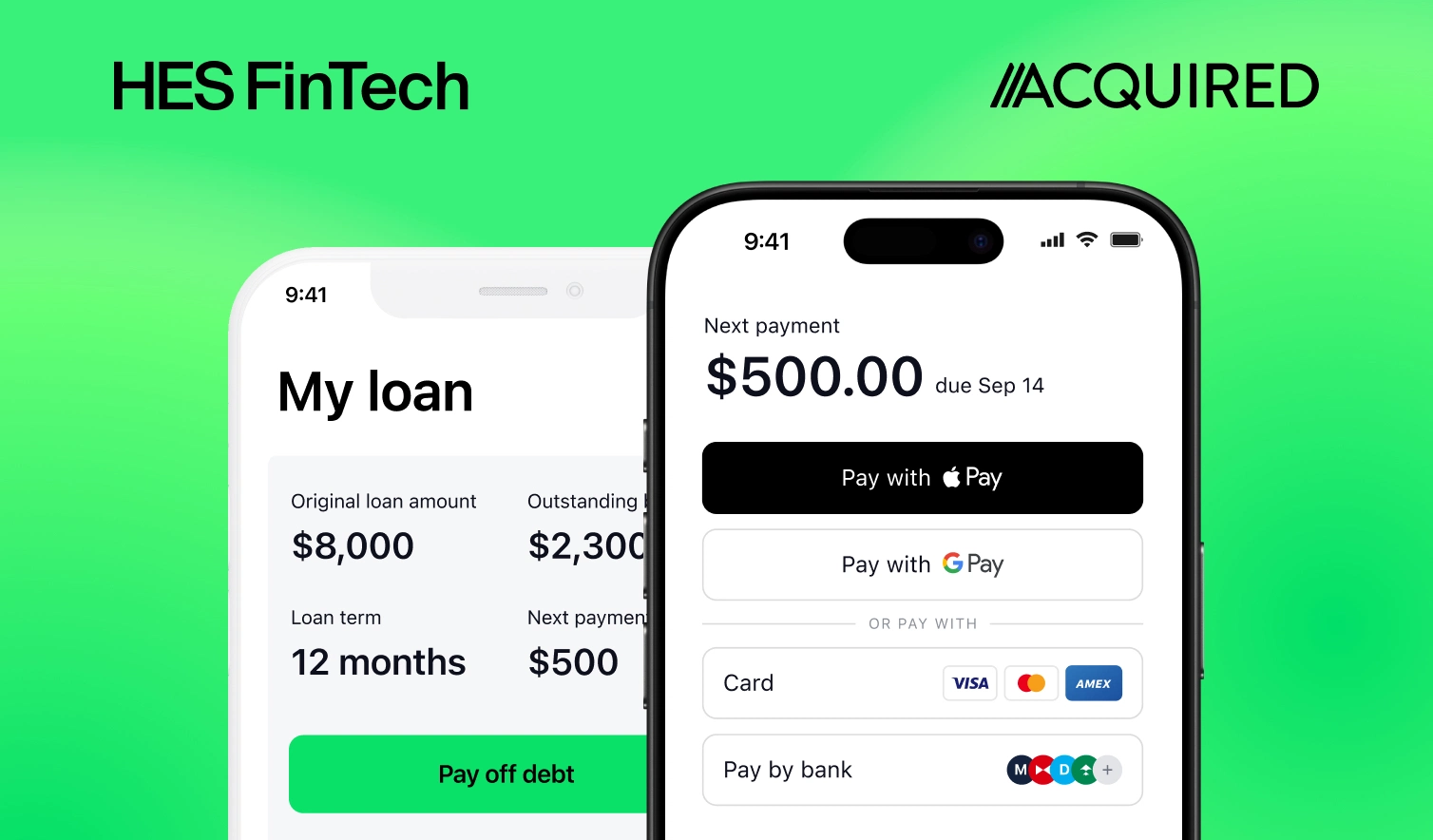
Lenders and collections teams running on HES LoanBox and HES CollectionAgent in the UK can now work across multiple payment rails through a single integration: card processing, Direct Debit, open banking, instant payouts, and Variable Recurring Payments (VRPs). Repayments and recoveries move between methods within one integration, without a separate build for each.
The timing follows a change in the UK market. On 2 June 2026, commercial VRPs went live under the UK Payments Initiative (UKPI). Acquired, a founding shareholder of UKPI, offers cards, Direct Debit, and both sweeping and commercial VRPs in one stack and brings that combination to lenders through HES LoanBox.
Multiple Payment Rails, One Integration
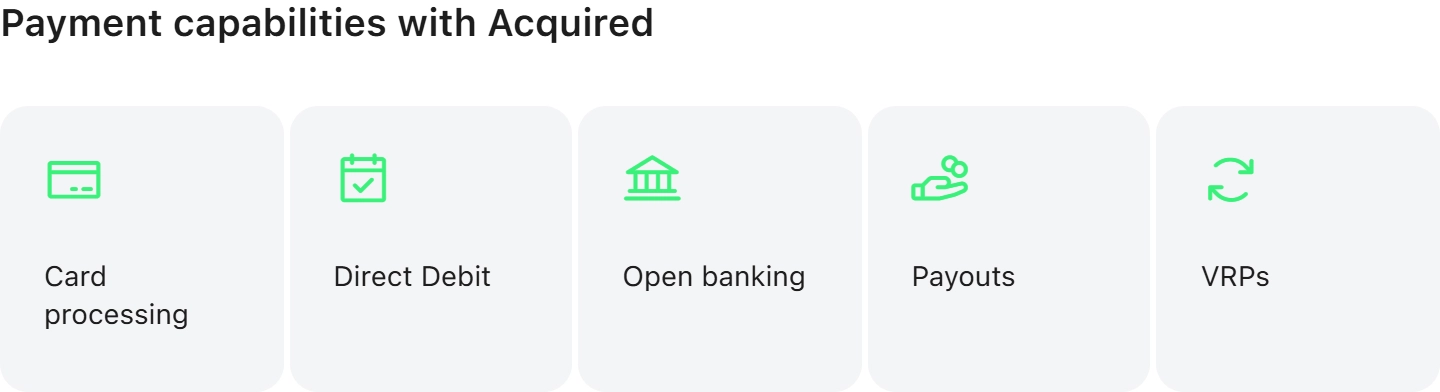
Each rail on the list fits a different part of servicing and collections.
Card processing is the most widely recognized payment method, and card-on-file supports recurring charges. The trade-off is cost: percentage-based fees apply to each transaction, and payments fail when a card expires or is declined.
Direct Debit is more cost-effective for scheduled collections. Its limitations are settlement speed and visibility: it does not settle in real time, and it cannot confirm that funds are available before a payment is collected.
Open banking, also known as Pay by Bank, initiates a bank-to-bank payment straight from the customer's account, with no card details stored. The constraint is recurrence: a plain Pay by Bank payment has to be approved by the customer each time, which is exactly the gap VRP closes.
Payouts cover the outbound side of an account rather than collection. In lending and collections, that covers disbursing loan funds to a borrower or returning an overpayment. They are made in seconds across Faster Payments, Visa Direct, and Mastercard Send, with Confirmation of Payee, including the recipient name against the account checks before funds move and settlement accounts built in. Because payouts run through the same integration as the collection rails, a lender can pay out from the same workflow it uses to collect, with no separate build.
Variable Recurring Payments (VRPs) work through a consent mandate. The customer approves it once in their banking app, setting a maximum amount, a frequency, and a duration. The business then collects within those limits without asking the customer to re-authenticate each time, and the customer can view or cancel the mandate from the app at any point.
Because the integration embeds Acquired’s payment methods into HES LoanBox, lenders can offer these rails inside the servicing and collections workflows they already run and set which method applies for a given borrower or product rather than standardizing on one.
What This Means for Lenders and Collections Teams
The value shows up in specific operational problems. Here are the three most common patterns among lenders.
Collections That Stall at the Cure Stage
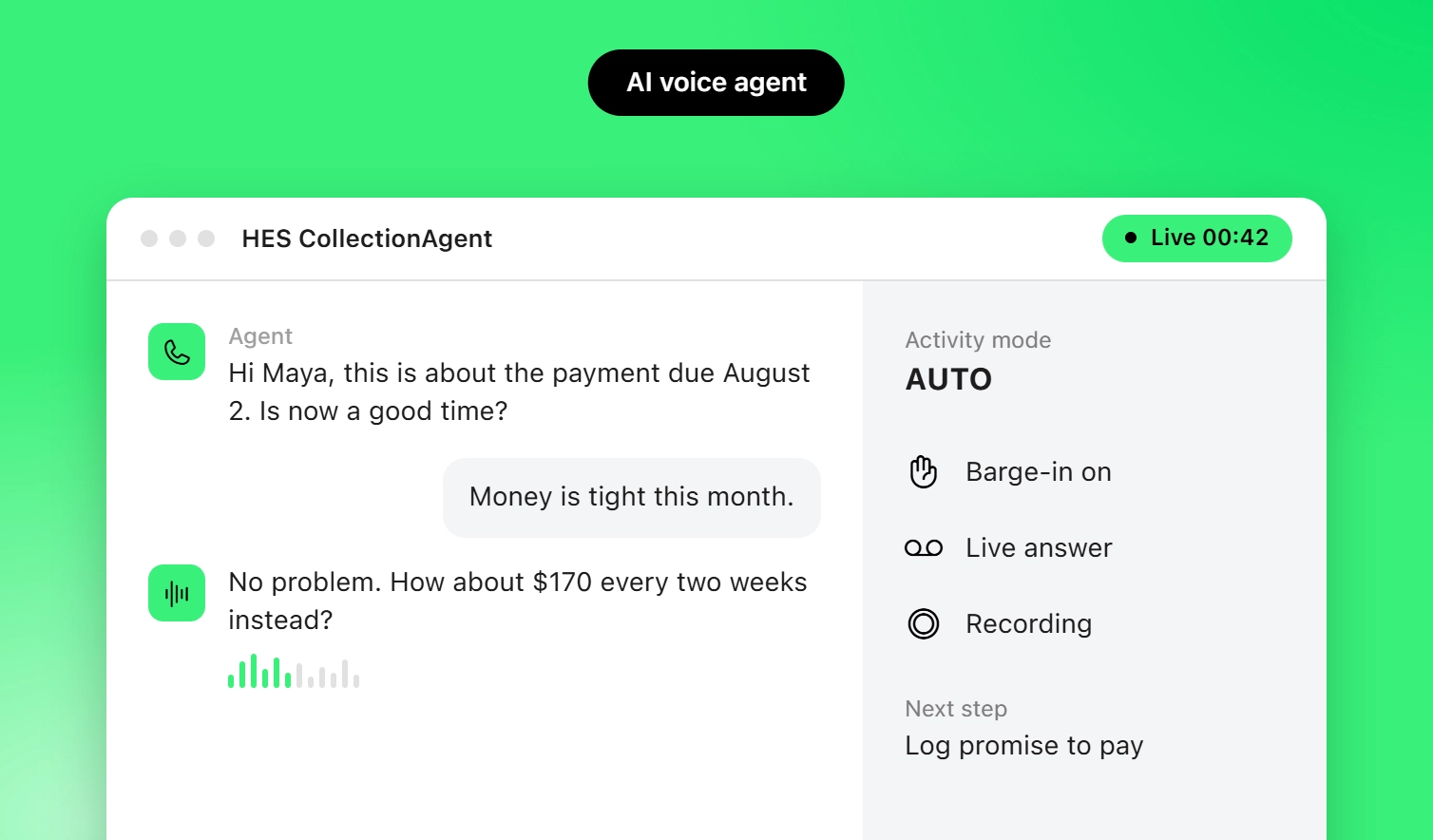
As arrears climb, a collections team working accounts manually hits a capacity limit. With HES CollectionAgent, the team can prioritize which accounts to work and inform the timing and channel of borrower outreach, while Acquired.com handles the payment step. For a borrower who missed a payment, a secure payment link can go out by SMS or email so they can settle at once, and where a longer arrangement fits, a VRP mandate lets an agreed repayment collect automatically within limits the borrower has set.
Thus, Acquired reports that automated payment links have improved recovery rates by at least 10% in soft-decline cases such as insufficient funds.

Failed Recurring Repayments and Silent Drop-Off
Consumer and BNPL lenders lose repayments when a stored card expires or declines, the borrower does not cancel but simply stops paying. Within HES LoanBox servicing, Acquired's Network Tokenization keeps card credentials current in the background, and retry rules the lender sets re-attempt failed payments at times more likely to succeed. Where a borrower prefers, moving the repayment to a VRP mandate removes card expiry from the picture, since the payment comes straight from the bank account.
Payment Cost and Cash-Flow Drag on a Large Portfolio
A lender carrying a large recurring portfolio pays percentage fees on cards and waits on Direct Debit settlement. A multi-rail setup lets the lender keep cards and Direct Debit where they fit and route eligible UK collections to commercial VRPs, which bypass scheme and interchange fees and settle in near real time, improving cash-flow visibility. HES LoanBox lets the lender set which rail applies per borrower and product, and Acquired provides all of them through the one integration.
A borrower doesn't fall into arrears because they can't pay. Most of the time, it's because the way they'd naturally pay isn't on offer. Building multiple payment rails into LoanBox means HES FinTech's clients can put the right method in front of each borrower, rather than one method in front of everyone, and that's a real lever for keeping accounts current.

Looking Ahead
Commercial VRPs are early in their rollout, and the scheme is set to widen over time, with loan repayments among the areas it is expected to reach. As coverage grows, lenders on HES LoanBox can add the rail to servicing and collections without reworking what they already have. For now, the four rails run together, and each collection can go to whichever method tends to perform best for a given borrower. Lenders can see the payment options inside HES LoanBox and HES CollectionAgent by booking a demo.
About HES FinTech
Founded in 2012 and headquartered in Vilnius, Lithuania, HES FinTech provides automated lending and loan management software for banks and financial institutions. Its product ecosystem covers the credit lifecycle from scoring through servicing and recovery, with HES LoanBox as its lending platform, GiniMachine as its AI decisioning product, and HES CollectionAgent as its AI debt collection tool.
About Acquired
Founded in 2016, Acquired began with a singular focus: making card payments work harder for financial services businesses. A decade on, they’ve broadened that focus into recurring commerce, covering both financial services and subscription businesses, across cards, open banking, VRPs, direct debit, and payouts on a single API.