Digital factoring is one route many corporate lenders take when they expand their offerings, and it works for both sides: businesses get quicker access to the cash tied up in their invoices and more predictable access to working capital, while lenders can add a working-capital finance product, as long as credit, fraud, dilution, and concentration risks are properly managed.
The demand is there. Global factoring turnover surpassed €4 trillion for the first time in 2025, reaching €4,039 billion, up 3.7% on the year, with North America, led by the US, growing about 35% (FCI). Turnover is not the same as revenue or profit, but it shows receivables finance holding its place as a working-capital tool, and a modern factoring platform is what lets a lender serve that demand efficiently. For SMEs, access to bank lending stays uneven: borrowing costs are still high and requirements strict, even where conditions have started to ease, which keeps receivables finance in the mix.
This article covers what changed in the last two years, what a modern factoring platform has to do, and how to decide whether to build, buy, or configure one.
How a factoring platform works: speed and cost
The two tasks a vendor solves in factoring software development are increasing speed and lowering cost. Most businesses first ask for electronic document flow to cut paperwork, right-size staff, and lift turnover. That is a one-dimensional way to look at it.
By moving to an automated invoice factoring platform, banks, factors, investment funds, and securitization funds can get:
- An end-to-end digital tool for client servicing and multichannel access to factoring and invoice financing
- Online transactions without in-person office visits
- Automated matching of payments and receivables
- Automated statistics and reporting
- Fast, bulk upload of receivables
- Support for different products (invoice discounting, reverse factoring, and more)
- User roles and access levels
- Configurable interfaces and business processes: factoring contracts, supply contracts, payment requests, documentation, buyers
All of it can sit inside a white-label platform. One decision shapes the build: should factoring be added to the existing core banking system, or run as a standalone module? Both paths have trade-offs. A separate, configurable factoring module is often a practical option when the lender wants to keep the core stable while evolving the factoring product on its own cycle.
Types of factoring your platform has to support
Factoring is not one product, and a platform that only handles the simplest case will hit a wall the first time a client asks for something else. Depending on the markets and clients you serve, the models to plan for can include:
- Recourse vs non-recourse. Who carries the loss if the debtor does not pay. In non-recourse arrangements the factor assumes the contractually covered debtor credit risk, while disputes, dilution, fraud, and breaches of representation may stay with the seller, which raises the bar on debtor scoring and limits.
- Invoice discounting. The client commonly keeps control of collections, and the arrangement can stay confidential, depending on the product and jurisdiction. The platform funds against the ledger rather than individual verified invoices.
- Reverse factoring and supply chain finance. Initiated by the buyer to pay suppliers early. Different onboarding, different limit logic.
- Spot factoring. Single-invoice funding, which demands fast, low-friction verification.
- Export and import factoring. Cross-border, often under a two-factor model, with correspondent factors and currency handling.
Model coverage is the first real selection axis. A platform's data model, limit engine, and pricing rules either flex across these or they do not.
Why now: e-invoicing mandates are reshaping factoring
One of the strongest reasons to modernize a factoring platform in 2026 is not efficiency in the abstract. It is that invoices are becoming increasingly structured and, in some jurisdictions, connected to tax-reporting or clearance systems.
The EU's VAT in the Digital Age (ViDA) package entered into force on April 14, 2025, giving member states greater scope to introduce domestic e-invoicing mandates; EU-wide digital reporting for certain cross-border B2B transactions is scheduled to apply from July 1, 2030 (European Commission). National timelines are already moving. In Germany, businesses have had to be able to receive compliant e-invoices since January 2025, with issuance phased in through transitional rules toward a general mandate in 2028. Belgium requires structured B2B e-invoicing between VAT-liable businesses from January 2026. France requires all companies to receive e-invoices from September 2026, with issuance starting then for large and mid-size companies and from September 2027 for smaller businesses. The UK has confirmed mandatory e-invoicing for VAT invoices from April 2029.
For a factoring platform this is concrete. Platforms serving European markets increasingly need to support structured invoice formats based on EN 16931 and, where relevant, exchange mechanisms such as Peppol, national platforms, or approved service providers. Clean, machine-readable invoice data is easier to verify and fund than a PDF someone keys in by hand, so platforms built for structured invoicing can turn a compliance step into faster onboarding of receivables.
Automated receivables management
One of the most useful parts of a factoring platform is automated receivables management. The core features usually come down to five:
- Bulk import of invoices
- Document storage, internal or separate
- Status tracking of receivables and automatic booking of invoice payments
- Notifications on key events: payout, expiration, payback
- Real-time counterparty management: add, modify, and remove in one place
Automation can reduce the share of dilution caused by billing and data-entry errors, though commercial disputes, returns, rebates, and credit notes remain.
The factoring lifecycle, automated
A factoring platform automates the full deal path. Each stage can be configured to a lender's own rules.
Origination. From application, underwriting, and scoring through approval, contracting, and e-signature. At this stage the platform handles registration and authorization flows, KYC, electronic document management, and due diligence.
Servicing. The workflow from disbursement through repayment to closure runs on a configurable product engine, with payment calculation and date changes, so new products can reach market faster and existing ones can change, often without rebuilding the whole platform. Overdue accounts pass into collections.
Reporting. Factoring needs close monitoring. An in-built reporting engine supports configurable operational, risk, portfolio, and management reports, with exports in commonly used formats.
AI decisioning and fraud control
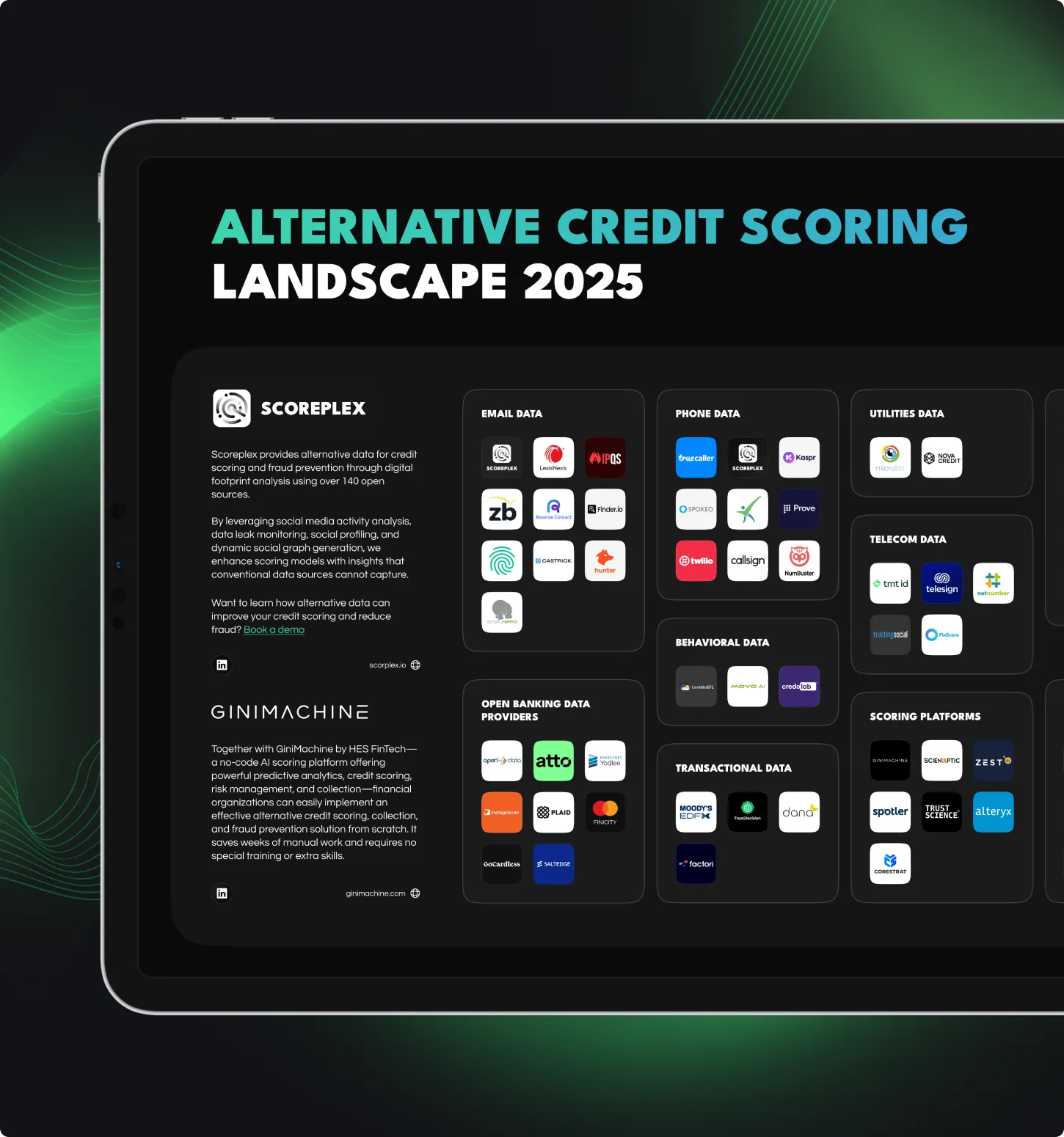
An AI scoring layer such as GiniMachine can be configured to support client or debtor risk assessment, provided the relevant factoring data is available to develop and validate the model. Instead of static rules alone, it can work with alternative data and sit on top of a platform's own scoring rather than replacing it. Fraud is the other half of the risk in factoring: duplicate or altered invoices and fabricated debtors. Platforms can flag duplicate or suspicious invoices within the data available to them, but detecting the same invoice financed by several factors generally needs external registries, shared data sources, or industry-level verification. Treated correctly, these signals are risk indicators that route cases to manual review, not final proof of fraud.
Client portals and self-service
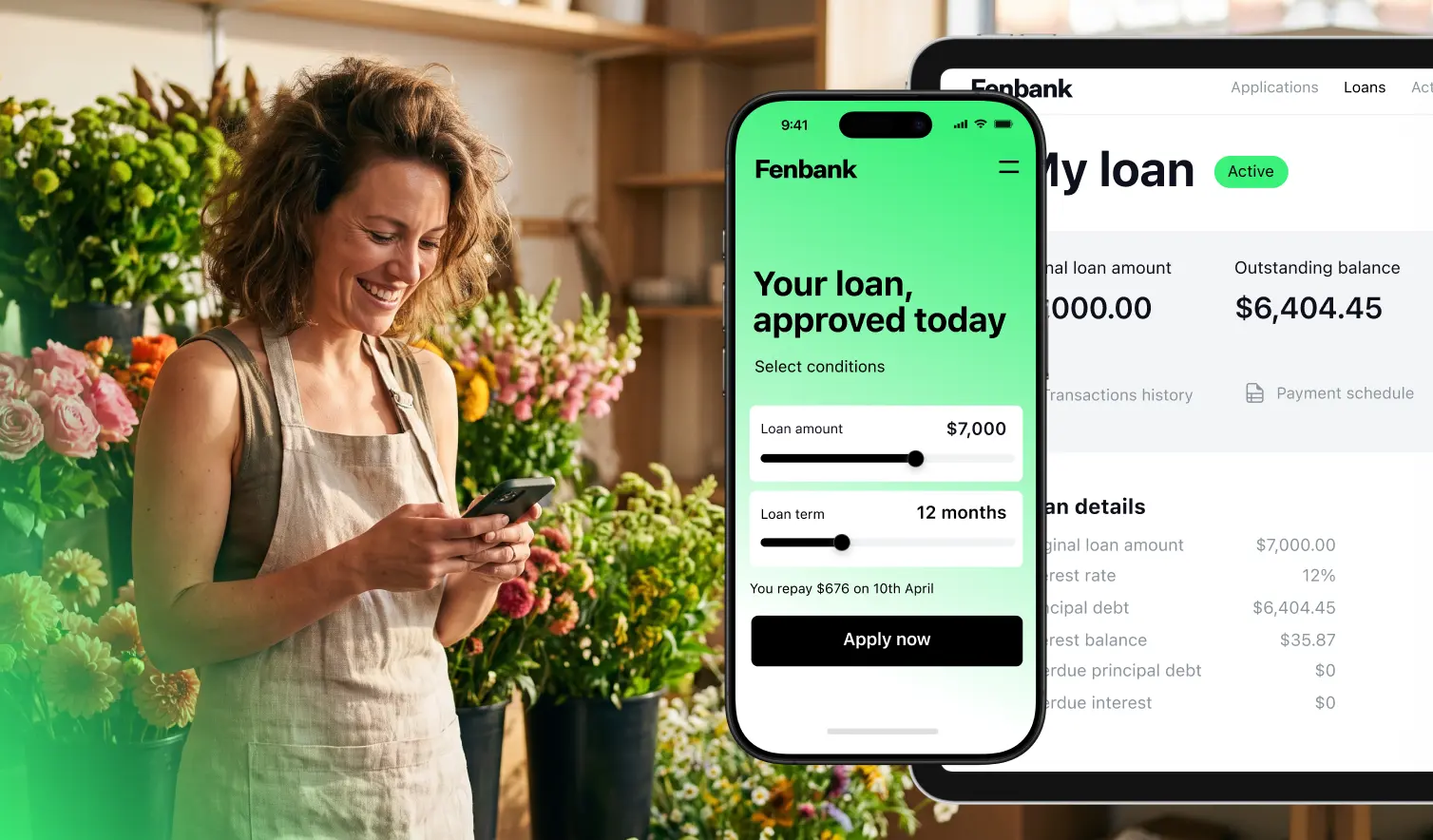
Your software costs you time whenever a client has to call to ask whether an invoice was funded or what their reserve balance is. A modern factoring platform gives clients a self-service portal that mirrors the factor's own view: funding status, reserves, invoice upload with document recognition, and bulk authorization, with mobile access to the same data. A separate debtor view can be added where it helps. This can cut routine status enquiries and free account managers to spend more time on portfolio and client work.
Integrations that matter
Many legacy factoring systems were built with limited external connectivity. A current factoring platform has to work with the rest of the stack. The integrations that carry weight:
- Accounting and ERP: QuickBooks, Xero, NetSuite, and the client's own systems, so invoice and ledger data flows without rekeying.
- Debtor and credit data: bureaus and debtor-risk sources feeding limits and scoring.
- Payments and banking: disbursement and reconciliation.
- E-invoicing networks: Peppol access points and EN 16931 handling, where relevant.
- E-signature for contracts and confirmations.
An open API shortens the path to the next integration, though how long any one takes depends on documentation, authentication, data mapping, testing, and the other vendor's cooperation. Good connectivity can cut avoidable processing delays that lengthen collection cycles.
Deployment, security, and compliance
For regulated and enterprise lenders, common procurement requirements include secure deployment options, role-based access, audit logs, multifactor authentication, and recognized assurance frameworks such as ISO/IEC 27001 and SOC 2. HES FinTech reports ISO/IEC 27001 certification and a completed SOC 2 examination, with cloud, on-premises, and hybrid deployment, role-based access, and audit trails. These matter most when the platform holds live receivables data.
Build, buy, or configure a factoring platform?
HES LoanBox is one example of a preconfigured, customizable platform, the middle option between off-the-shelf SaaS and a full custom build. SaaS may deploy faster but can impose configuration or extension limits: the moment you need a contract type, a limit rule, or a workflow it does not have, you wait. Building from scratch bends to anything but is slow and costly to run and maintain. The middle option may suit lenders that need faster implementation than a custom build but more flexibility than standard SaaS.
In practice, this kind of platform tends to offer:
- Implementation of roughly three to six months, depending on scope, integrations, data migration, and regulatory requirements.
- Configurable products, workflows, and forms, so a new factoring model does not always require a new project.
- An optional developer license that can provide access to the full source code, so the customer's team can host, maintain, and extend the platform under the agreed commercial and licensing terms.
- Open-source technologies and no per-user fees, so growth in volume is not taxed by growth in license seats.
New modules and products can be added on the same platform later. Source-code access can materially reduce technical dependency on the original vendor, though third-party licenses, upgrades, and support needs mean it does not remove every form of lock-in. The real question is less build-or-buy and more how much you need to change, how fast, and who owns the result.
Three factoring platforms worth knowing
This is not a single "best" list. Factoring platforms fit different lender types, so the useful question is which one matches your scenario. The notes below are drawn from each vendor's publicly available materials, accurate as of the publication month. Confirm current details with each vendor.
- HES LoanBox. Based on HES FinTech's published product materials, it is positioned for lenders that want broad, end-to-end coverage, onboarding through origination, decisioning, servicing, and collections, in one configurable, white-label platform, with factoring as a configurable module and an optional developer license.
- FactorAvenue. A newer AI-powered cloud platform for receivables finance, covering onboarding, invoice verification, risk assessment, funding, collections, and reporting, with published material for sectors such as staffing and healthcare (ABF Journal). Aimed at operations handling higher invoice volumes.
- Comarch Factoring. Front-to-back factoring functionality for banks and larger financial institutions, with enterprise and cloud deployment options. Suited to institutions seeking broad factoring capability across the lifecycle.
FAQ
How does invoice factoring software work?
It ingests receivables, verifies them, applies advance rates and reserves, funds the client, then tracks collection and settlement against limits.
What is the difference between recourse and non-recourse factoring?
Under recourse, the client absorbs the loss if the debtor does not pay. Under non-recourse, the factor assumes the contractually covered debtor credit risk, while disputes, fraud, and dilution may stay with the seller.
What is reverse factoring?
A buyer-initiated program that lets suppliers get paid early against approved invoices, also called supply chain finance or approved-payables finance.
Should we build or buy factoring software?
Buy when your process is standard, build when it is unique, and configure a preconfigured platform when you need customization without a full custom build.
How long does factoring platform development take?
Platform-based implementations typically take around three to six months, depending on scope, integrations, data migration, and regulatory requirements.